
Budget Shaving Kit for Black Men: Practical Grooming Guide
Shaving as a Black man with coarse, curly facial hair is a different game. If you’re reading this, you probably know the stakes: razor bumps, ingrown hairs, irritation, and dark marks aren’t just minor annoyances—they can mess with your comfort and confidence. But building a grooming routine that works for your skin and hair type shouldn’t mean emptying your wallet. The right budget shaving kit for Black men can get the job done without sacrificing skin health or results.
Premium grooming isn’t about price tags or hype. It’s about understanding what your skin and hair actually need, and making smart, practical choices. This guide is grounded in what works for real men with real concerns—no miracle claims, no shame, no stereotypes. You’ll get clear, direct advice on assembling a budget shaving kit that respects your skin, minimizes bumps, and keeps your grooming routine simple and effective.
If you’re tired of irritation, frustrated by stubborn bumps, or just looking to upgrade your tools without overspending, you’re in the right place. We’ll break down what usually goes wrong, what to do instead, how to choose the right products, and how to troubleshoot common issues. For deeper dives into related topics, check out our Razor Bumps, Ingrown Hairs & Shaving Systems pillar for Black men.
Routine Scenarios and Decision Checks
Before Work: Fast, Focused, and Professional
Starting your day with a clean shave or a tidy trim can set the tone for professionalism. When time is tight, your budget shaving kit should be organized and ready. Decide whether you need a full shave or a quick line-up by assessing your facial hair growth and your workplace standards. If your skin feels sensitive or you notice minor bumps, opt for a gentle trim instead of a close shave. Use your kit’s mild cleanser and a sharp blade—never rush with a dull razor. If you’re running late, focus on the most visible areas (neckline, cheeks, jawline) and leave more detailed grooming for another time. The goal is to look intentional, not perfect.
Before a Barber Visit: Prep, Don’t Overdo
Before heading to the barber, avoid shaving or trimming too close to the skin. Let your barber see your natural hair growth patterns, especially if you’re dealing with razor bumps or ingrown hairs. Use your kit’s brush or comb to detangle and lift the hair, but skip aggressive exfoliation or shaving within 24 hours of your appointment. If you want to tidy up, use clippers with a guard to lightly even out your beard or mustache, but leave the shaping to the professional. This approach prevents irritation and gives your barber the best canvas to work with.
After Irritation: Pause and Reassess
If you experience redness, bumps, or discomfort after shaving, resist the urge to shave again or pile on products. Put your razor down and switch to a gentle, fragrance-free moisturizer from your kit. Avoid alcohol-based aftershaves and let your skin recover for at least a couple of days. Use this downtime to check your technique: Are you applying too much pressure? Are you shaving against the grain? Did you skip pre-shave prep? Sometimes, less is more. If irritation persists, consider trimming instead of shaving until your skin calms down. Your kit should support a flexible approach—sometimes the best move is to pause.
When Your Schedule or Budget Changes
Life can get hectic, and budgets can tighten. If you’re pressed for time or need to stretch your supplies, simplify your routine. Use fewer products—your cleanser and a reliable razor or trimmer are often enough. Clean your tools thoroughly to extend their lifespan. If you run out of a specialty product, don’t panic; stick to gentle basics until you can restock. When money is tight, prioritize replacing blades and keeping your kit clean over buying new gadgets. A disciplined, minimalist approach can be just as effective as a multi-step routine.
Deciding Whether to Shave, Trim, or Pause
Every day won’t call for a full shave. Tune in to your skin’s needs and your schedule. If you notice irritation, opt for a trim or take a break. If you’re aiming for a sharp look for an event or meeting, plan your grooming the night before to avoid rushed mistakes. Your kit should make it easy to switch between shaving and trimming. If you’re unsure, err on the side of caution—trimming is less likely to cause bumps or cuts. Remember, consistency and care outweigh the pursuit of a perfectly close shave.
Adjusting Pressure and Technique
The pressure you use with your razor or trimmer matters, especially for coarse or curly hair. If you’re getting nicks or bumps, lighten your touch. Let the blade do the work—don’t press down hard. Use short, controlled strokes and rinse your blade often. If you’re new to shaving or using a budget kit, practice on a small area first to find the right angle and pressure. Over time, you’ll develop a feel for what your skin can handle. If you notice more irritation after switching products or tools, reassess your technique before blaming your kit.
Simplifying Products Without Sacrificing Results
A budget shaving kit doesn’t have to mean sacrificing quality. Focus on essentials: a gentle cleanser, a sharp blade, a moisturizing shave cream or gel, and a soothing aftercare product. Skip harsh scrubs, strong fragrances, or unnecessary add-ons. If your skin feels overwhelmed, scale back and give it time to adjust. Sometimes, simplifying your routine reveals what truly works for you. Pay attention to how your skin responds to each product—if something causes irritation, set it aside. Less clutter in your kit leads to more consistent results.
Reading Skin Feedback Without Panic
Your skin will tell you what it needs, but it’s easy to overreact to every bump or patch of dryness. Instead of panicking, observe patterns: Do you always get irritation in the same spot? Does your skin react differently to shaving versus trimming? Use your kit’s mirror and good lighting to check your progress. If you notice a problem, make one change at a time—switch your blade, adjust your pressure, or try shaving less often. Avoid drastic changes or harsh treatments. Trust that minor setbacks are part of the process, not a sign of failure.
Staying Intentional: Don’t Chase a Painfully Close Shave
For Black men, the quest for a super-close shave often leads to more harm than good. Coarse, curly hair is more likely to curl back into the skin, causing bumps and irritation. Your budget kit should help you achieve a clean, neat look without going overboard. Focus on evenness and comfort, not perfection. If you’re tempted to keep shaving the same spot for a closer result, stop and reassess. A slightly visible shadow is normal and far healthier than inflamed skin. Over time, a disciplined, intentional approach yields better results than chasing short-term smoothness.
When to Seek Professional Help
Sometimes, even the best routine and kit can’t solve persistent issues. If you’re dealing with severe irritation, frequent ingrown hairs, or signs of infection, it’s wise to consult a barber or dermatologist. Don’t wait for a minor problem to become a major one. Bring your kit to your barber and ask for feedback on your tools and technique—they can often spot issues you might miss. If you need to see a dermatologist, keep notes on what products you’ve used and how your skin has reacted. Professional guidance can help you refine your routine and avoid unnecessary trial and error.
Scenario: You Overslept and Need to Look Sharp
You wake up late and have only a few minutes to get ready. Prioritize the basics: splash your face with warm water, use your kit’s cleanser, and do a quick trim or line-up with your trimmer. Skip the full shave and focus on the edges for a clean outline. Apply a light moisturizer and check your appearance in natural light. The goal is to look refreshed and intentional, not flawless. Save the detailed grooming for your next free morning.
Scenario: You’re Between Paychecks and Low on Supplies
If your shaving cream or aftercare product runs out, don’t improvise with harsh household items. Stick to gentle cleansing and use your razor or trimmer with care. Clean your tools thoroughly after each use to prevent dullness and irritation. Prioritize replacing your blades when you can—sharpness is more important than extra products. If you need to stretch your supplies, shave less frequently and focus on maintaining neat lines rather than a full, close shave.
Scenario: You Notice More Bumps After Switching Razors
Switching to a new razor or blade type can change your skin’s response. If you see more bumps, pause and review your technique. Are you using more pressure to compensate for a lighter or heavier razor? Are you shaving against the grain? Go back to basics: use light pressure, shave with the grain, and keep your skin well-moisturized. If irritation continues, switch back to your previous razor or try trimming instead. Your kit should allow for these adjustments without extra cost.
Scenario: You’re Preparing for an Important Event
For a special occasion, plan your grooming routine a day or two in advance. Don’t try new products or techniques right before the event. Use your tried-and-true kit: cleanse, trim or shave with care, and apply a soothing aftercare product. If you want a sharper look, focus on clean lines and an even finish rather than a super-close shave. Check your results in different lighting and touch up only if necessary. Confidence comes from consistency, not last-minute changes.
Scenario: Your Skin Feels Dry or Tight After Shaving
Dryness or tightness is a sign your skin needs more moisture. Use a gentle, fragrance-free moisturizer from your kit after every shave or trim. Avoid alcohol-based aftershaves, which can worsen dryness. If the problem persists, consider shaving less often or switching to a milder cleanser. Your kit should support your skin’s health, not just its appearance. Listen to your skin and adjust your routine as needed.
Scenario: You’re Traveling or Away From Home
When you’re on the go, a compact, well-chosen kit is essential. Pack only the essentials: a sharp razor or trimmer, a small cleanser, and a travel-sized moisturizer. If you forget something, don’t improvise with unfamiliar products—stick to gentle cleansing and trim as needed. Clean your tools thoroughly and let them dry before packing. Adapt your routine to your environment, but keep your standards consistent.
Final Decision Checks: Stay Grounded and Disciplined
Every grooming decision is a chance to reinforce your discipline and self-respect. Before each shave or trim, ask yourself: Is my skin ready? Do I need a full shave, or will a trim suffice? Am I using the right pressure and tools? Is my kit clean and sharp? By making intentional choices, you avoid unnecessary irritation and keep your grooming routine sustainable—both for your skin and your wallet. A budget shaving kit, used with care and attention, delivers premium results through consistency and discipline, not excess.
Why This Matters for Black Men and Bump-Prone Shaving

For Black men, shaving isn’t just about looking sharp—it’s about protecting your skin. Coarse, curly facial hair is more likely to curve back into the skin after shaving, causing razor bumps (pseudofolliculitis barbae) and ingrown hairs. Add in the risk of irritation, dark marks (post-inflammatory hyperpigmentation), and scarring, and the stakes get higher.
Budget grooming for Black men isn’t about cutting corners. It’s about making smart choices that honor your skin’s unique needs. A practical shaving kit can help you:
- Reduce razor bumps and ingrown hairs by using the right tools and techniques
- Minimize irritation and dark marks with gentle, effective products
- Stay consistent with a routine that fits your budget and lifestyle
- Take control of your grooming experience, even if you’re new to it
It’s not about chasing a perfect look—it’s about comfort, confidence, and keeping your skin healthy. If you want to understand the science and strategies behind bump prevention, see our razor bump prevention guide.
What Usually Goes Wrong

Most shaving problems for Black men start with a mismatch between skin/hair needs and the products or techniques used. Here’s what typically goes wrong:
- Wrong tools: Multi-blade razors, dull blades, or harsh trimmers can cut hair too short or at the wrong angle, making ingrowns more likely.
- Lack of prep: Skipping pre-shave softening, using hot water only, or dry shaving increases friction and irritation.
- Cheap or harsh products: Alcohol-heavy aftershaves, drying soaps, and synthetic fragrances can strip moisture and inflame skin.
- Poor technique: Shaving against the grain, stretching the skin, or making too many passes can trigger bumps and nicks.
- Ignoring the grain: Not mapping your beard growth leads to shaving in the wrong direction, boosting irritation and bumps. For help, see our map your grain guide.
- Over-shaving: Chasing a baby-smooth finish every day increases trauma and risk of ingrowns, especially on the neck and jawline.
These issues aren’t about “bad skin” or “bad habits”—they’re about not having the right information or tools. The good news: you can fix most of them with a smarter, budget-friendly approach.
What to Do Instead

Building a practical, budget shaving kit for Black men is about working with your hair and skin—not against them. Here’s what to focus on:
- Soften hair before shaving: Use warm water, a gentle cleanser, and (if possible) a short steam or warm towel. This makes hair easier to cut and reduces tugging.
- Use lubrication: A sensitive skin shave gel or cream cushions the blade, reducing friction and irritation. Don’t dry shave.
- Shave with the grain: Always shave in the direction your hair grows. This lowers the risk of hairs curling back into the skin. For more, see our sensitive skin shaving guide.
- Limit passes and pressure: One or two gentle passes are enough. Pressing harder won’t get a closer shave—it just increases trauma.
- Use clean, sharp tools: Dull blades and dirty trimmers cause more irritation and drag. Replace or clean regularly.
- Don’t dig at ingrowns: Picking or digging can cause infection and scarring. If bumps are persistent or painful, consult a dermatologist.
- Consider guarded trimming: If you’re bump-prone, a guarded beard trimmer can keep hair slightly above the skin, reducing ingrowns. For a full breakdown, see our trimmer routine guide.
It’s about consistency and patience, not perfection. Over time, these habits can help your skin recover and reduce the cycle of bumps and marks.
Product and Tool Criteria for a Budget Shaving Kit
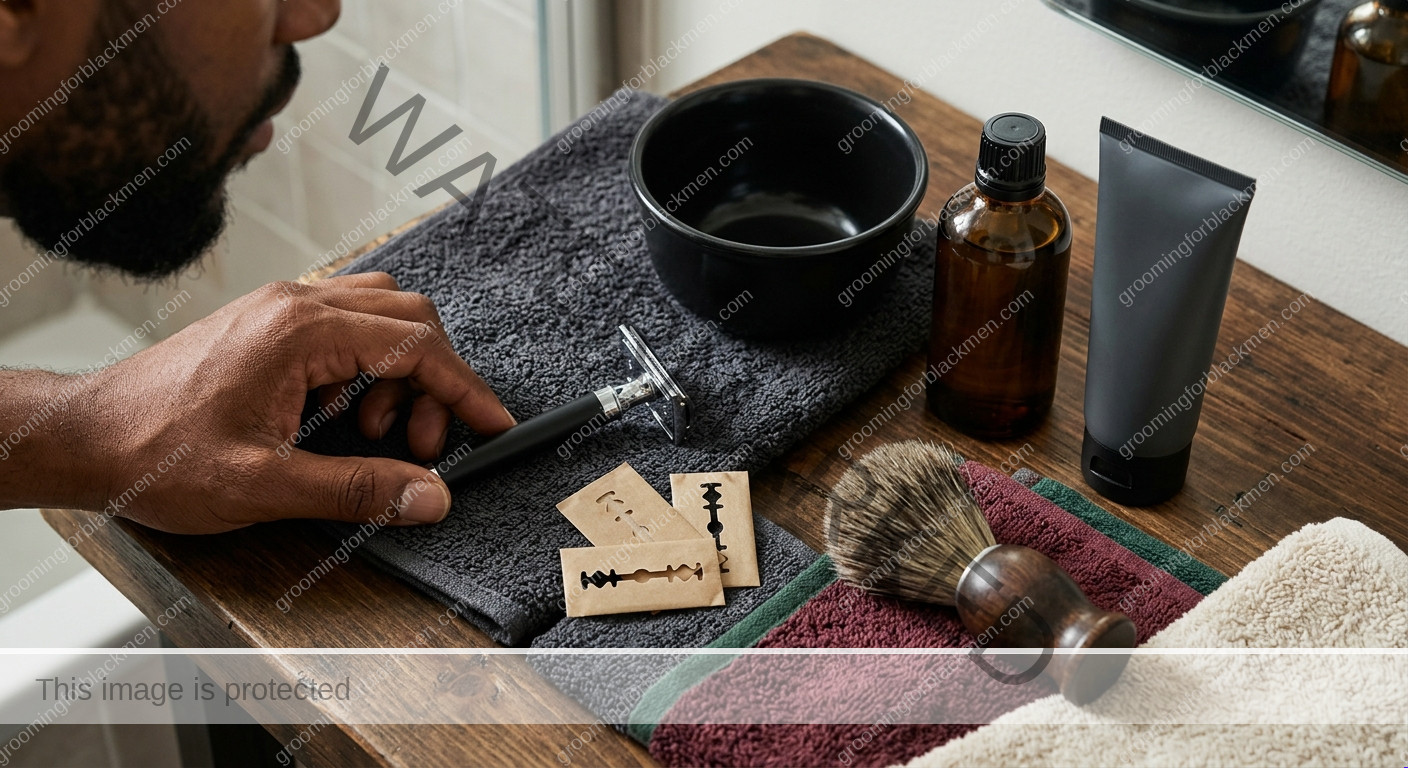
GFBM may earn a small commission from qualifying purchases, but product examples are included to clarify criteria, not to promise results.
You don’t need a drawer full of products or expensive gadgets. A practical, budget shaving kit for Black men should include:
- Gentle cleanser: Removes oil and dirt without stripping skin. Choose fragrance-free or for sensitive skin. A gentle cleanser forms the foundation of your routine, prepping your face for a smoother, less irritating shave.
- Budget beard trimmer: For many Black men, a trimmer with adjustable guards is safer than a razor. Look for models with sharp blades, easy cleaning, and length settings. Browse budget beard trimmers. When selecting a trimmer, prioritize those with stainless steel blades and guards that can be removed and cleaned. Cordless models offer flexibility, but corded trimmers can be more powerful and reliable for thicker hair.
- Sensitive skin shave gel: Look for alcohol-free, fragrance-free, and non-foaming gels or creams. These protect your skin and soften hair. Browse sensitive skin shave gels. Avoid aerosol foams, which can dry out skin and offer less cushion for curly hair.
- Single- or double-blade razor (optional): If you prefer razors, avoid multi-blade cartridges. Safety razors or single blades reduce the risk of cutting hair below the skin. For pros/cons, see our safety razor vs cartridge guide. A single blade gives you more control and reduces the risk of tugging and ingrowns.
- Alcohol-free aftershave balm: Soothes and hydrates skin without sting or dryness. Choose balms with aloe, allantoin, or panthenol. Browse alcohol-free aftershave balms. Aftershave balm calms the skin and helps lock in moisture, which is crucial for healing and comfort.
- Clean towel: For pat-drying your face—never rub aggressively. A soft, clean towel prevents irritation and keeps bacteria at bay.
Stick to the basics. Avoid harsh scrubs, astringents, or products with strong alcohol content. If you struggle with dark marks, see our razor bumps and dark marks guide.
How to Build Your Budget Shaving Kit: Step-by-Step
Let’s break down how to assemble your kit and use it effectively, step by step:
- Start with a Clean Face: Wash your face with a gentle, fragrance-free cleanser. This removes dirt, oil, and dead skin, prepping your face for a smoother shave and reducing the risk of irritation.
- Soften Hair: Use warm water or a damp, warm towel for a couple of minutes. This softens coarse, curly hair and opens pores. If you’re in the shower, let the steam do the work.
- Apply Shave Gel or Cream: Use a generous amount of sensitive skin shave gel or cream. Massage it in and let it sit for a minute to further soften hair.
- Shave or Trim:
- If using a trimmer, choose a guard length that leaves hair just above the skin. Trim with the grain, moving slowly and steadily.
- If using a razor, use a single or double blade. Shave with the grain, using light pressure and short strokes. Rinse the blade after every pass.
- Rinse and Pat Dry: Rinse your face with cool water to close pores. Pat dry with a clean towel—never rub.
- Apply Aftershave Balm: Use an alcohol-free balm to soothe and hydrate. Look for ingredients like aloe, allantoin, or panthenol to calm the skin.
- Clean Your Tools: Rinse your trimmer or razor thoroughly and allow it to dry. This prevents bacteria buildup and keeps your tools sharp and safe.
This routine is simple, affordable, and effective for most Black men with coarse, curly hair. Consistency is key—stick to your routine and adjust only if you notice persistent irritation or bumps.
Decision Criteria: Choosing the Right Tools for Your Kit
Every man’s skin and hair are unique. Here’s how to make smart, budget-friendly choices:
- Trimmer vs. Razor: If you’re highly bump-prone, start with a trimmer and a longer guard. If you want a closer shave, try a single-blade safety razor. Avoid multi-blade cartridges.
- Product Ingredients: Look for fragrance-free, alcohol-free, and non-comedogenic products. Avoid menthol, eucalyptus, and strong essential oils, which can irritate sensitive skin.
- Maintenance: Choose tools that are easy to clean and maintain. Replace blades or trimmer heads regularly to avoid bacteria and dullness.
- Affordability: You don’t need top-shelf brands. Focus on reliable, well-reviewed basics that fit your budget and do the job.
Example Budget Shaving Kit (Sample)
Here’s a sample kit that balances affordability and performance. Adjust based on your needs and preferences:
- Gentle, fragrance-free facial cleanser (drugstore or supermarket brand)
- Budget beard trimmer with adjustable guards (see examples)
- Alcohol-free, sensitive skin shave gel (see examples)
- Single-blade safety razor (optional, for those who want a closer shave)
- Alcohol-free aftershave balm (see examples)
- Soft, clean towel
For more options and reviews, check our ingrown hair treatment guide and sensitive skin shaving guide.
Routine Logic: Why Each Step Matters

Each step in your routine builds on the last to minimize trauma and maximize comfort:
- Cleansing removes irritants and preps hair for cutting.
- Softening makes coarse hair easier to cut, reducing tug and blade drag.
- Lubrication cushions the blade or trimmer, reducing friction and micro-cuts.
- Shaving/trimming with the grain prevents hair from being cut too short or at an angle that increases ingrown risk.
- Aftercare soothes, hydrates, and helps skin heal, reducing the risk of dark marks and irritation.
This logic is grounded in the realities of Black men’s skin and hair—not marketing hype. For more on the science, see our razor bump prevention guide.
Troubleshooting and When to Get Help
Even with the best routine and a solid budget shaving kit, bumps or irritation can still happen. Here’s how to troubleshoot:
- Persistent bumps: If you’re still getting bumps, double-check your technique—especially shaving with the grain and tool cleanliness. Consider switching to a guarded trimmer if you’re using a razor.
- Dark marks: These can fade over time with gentle care, sunscreen, and avoiding picking. For more, see our dark marks guide.
- Neck irritation: The neck is especially prone to bumps. Try trimming instead of shaving, or use a lighter touch. For targeted advice, see our neck bumps guide.
- Severe or spreading bumps: If bumps become painful, infected, or start to scar, see a dermatologist or qualified clinician. Don’t try harsh home remedies or dig at trapped hairs.
- Frequent irritation: Reassess your products—look for fragrance-free, alcohol-free, and gentle formulas. Consider shaving less often or switching to trimming.
Remember: razor bumps and ingrown hairs are common for Black men with coarse, curly hair. Prevention and management are possible, but there are no instant fixes. If you need more troubleshooting tips, see our ingrown hair treatment guide.
Frequently Asked Questions
How often should I shave to avoid razor bumps?
Most Black men with bump-prone skin do better shaving every 2-3 days, or even less often. Daily shaving increases the risk of irritation and ingrowns. If you can, trim with a guard instead of shaving close every day.
Are electric shavers better for Black men with sensitive skin?
For many, yes. Foil or guarded electric shavers are less likely to cut hair below the skin, reducing bumps. Avoid rotary shavers, which can tug curly hair. For more, see our electric shavers guide.
What’s the best way to map my beard grain?
Let your facial hair grow for a few days, then run your fingers in different directions. The direction that feels smoothest is “with the grain.” Shave in that direction to lower irritation. For step-by-step help, see our map your grain guide.
Can I use a budget shaving kit if I have existing dark marks?
Yes. Gentle shaving or trimming, combined with alcohol-free aftershave and sun protection, can help prevent new marks. For fading existing marks, patience and consistent care are key. See our dark marks guide for more options.
Should I exfoliate before shaving?
Gentle exfoliation (once or twice a week) can help prevent ingrowns by clearing dead skin, but avoid harsh scrubs. Use a soft washcloth or a mild chemical exfoliant designed for sensitive skin. Don’t exfoliate right before shaving if your skin is irritated.
What if I get bumps mainly on my neck?
The neck is especially prone to razor bumps for Black men. Try trimming instead of shaving, use minimal pressure, and consider shaving less often. For specific strategies, see our neck bumps guide.
Is it safe to use aftershave with alcohol?
Alcohol-based aftershaves can dry and irritate skin, especially if you’re prone to bumps. Choose alcohol-free balms with soothing ingredients like aloe or allantoin instead. For product ideas, see the product section above.
What to Do Next
Building a budget shaving kit for Black men isn’t about settling—it’s about making choices that respect your skin and your wallet. Start with the basics: a gentle cleanser, a guarded trimmer or single-blade razor, a sensitive skin shave gel, and an alcohol-free aftershave balm. Focus on technique, not just tools: soften hair, shave with the grain, and avoid over-shaving.
If you’re still struggling with bumps, irritation, or dark marks, don’t go it alone. Explore our guides on razor bump prevention, ingrown hair treatment, and budget grooming for Black men for more tailored advice. If bumps are painful, infected, or scarring, consult a qualified clinician.
Grooming for Black men is about practical self-respect. Invest in your comfort, not just your look. A smart, budget-friendly shaving kit is a solid step forward.