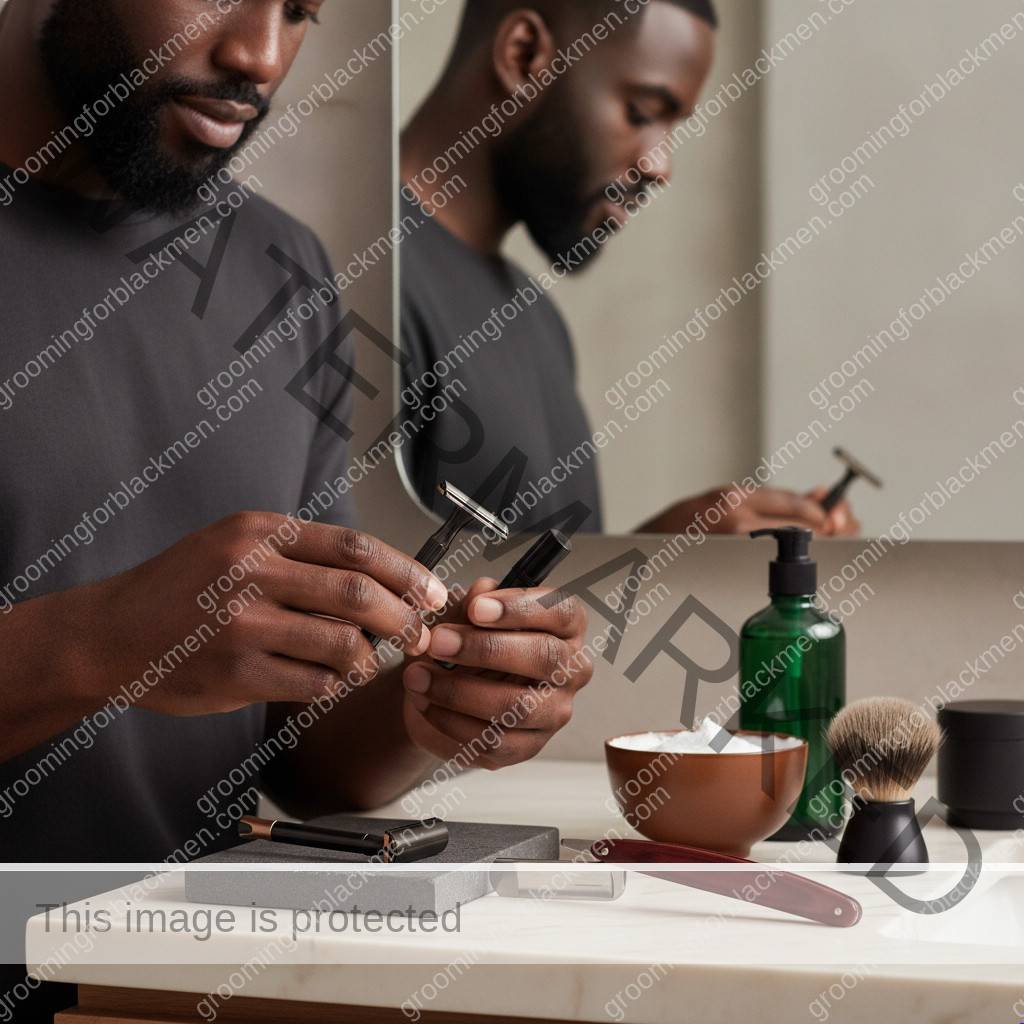
Shaving is a daily or weekly ritual for many Black men, but it’s rarely a simple matter of “just shave and go.” If you’ve ever dealt with razor bumps, ingrown hairs, or irritation, you know that the type of razor you use can make or break your grooming routine. The debate between safety razors and cartridge razors isn’t just about tradition or hype—it’s about finding the least irritating way to keep your skin smooth and healthy, especially if you have coarse, curly hair that’s prone to bumps.
This guide is built for Black men who want clarity, not guesswork. We’ll break down the real-world pros and cons of safety razors versus cartridge razors for bump-prone skin. You’ll get a grounded, practical decision framework, honest product examples, and troubleshooting advice—without shame or empty promises. If you’re tired of irritation and want to understand which shaving system fits your skin and lifestyle, you’re in the right place.
We’ll also connect you to related resources across Grooming For Black Men, including guides on razor bumps, ingrown hairs, and sensitive skin shaving. Let’s get into the details that matter.
The Real Test Is Recovery
The best razor is not always the one that looks sharpest in the mirror five minutes after shaving. For bump-prone Black men, the real test is how the skin looks and feels the next day. Track tightness, tenderness, new bumps, and whether dark marks are getting repeatedly re-triggered. If a cartridge razor gives a glassy finish but leaves the neck irritated for three days, it is not the better option for that face. If a safety razor feels controlled but causes nicks because the angle is inconsistent, slow down before blaming the tool.
Field-Test This Routine Before You Judge It
Let’s get real: the only way to know if a safety razor or cartridge is right for your skin is to actually put them to work—on your face, with your beard, under your real-life conditions. This isn’t about theory. It’s about what happens on a rushed Tuesday morning, or when you’re prepping for a fresh fade at the barber, or dealing with the fallout from last week’s irritation. Here’s how to run a practical, side-by-side test and what to watch for—especially if you’re a Black man with coarse, curly, or bump-prone facial hair.
Step 1: Prep Like You Mean It
Don’t skip prep. Whether you’re using a safety razor or a cartridge, your results start before the blade even touches your face. For Black men, whose hair is often curly and skin can be sensitive, proper prep is non-negotiable:
- Cleanse: Use a gentle, non-drying cleanser to remove oil and dirt. This helps prevent bacteria from getting into any micro-cuts.
- Hydrate: Shave after a warm shower or apply a hot towel for a few minutes. This softens coarse hair and opens pores.
- Lubricate: Use a rich, non-foaming shave cream or gel. Avoid anything with heavy fragrance or alcohol, which can dry and irritate.
Step 2: Split-Test—One Side Safety, One Side Cartridge
On a day when you’re not in a rush, shave one side of your face with a safety razor and the other with a cartridge. Take your time. Use the same prep and technique on both sides. Here’s what to look for:
- Blade Feel: Does one tool feel smoother or rougher as it glides? Is there drag or pulling, especially on your neck or jawline?
- Closeness: Does the cartridge give you a closer shave, or does the safety razor leave fewer visible hairs?
- Skin Reaction: Watch for redness, bumps, or irritation immediately and 24-48 hours later. Take notes or photos if you need to track changes.
- Ingrown Hairs: Over the next few days, check for new bumps or ingrowns. Don’t overreact to one or two bumps—look for trends over a week or two.
- Dark Marks: If you’re prone to hyperpigmentation, see if one side heals faster or leaves less discoloration.
Real-World Scenarios: What Matters Most
Let’s break down how each tool stacks up in the situations you actually face, not just in theory:
1. Rushed Mornings
- Cartridge: Fast, forgiving, and designed for speed. If you’re half-awake and running late, a cartridge is less likely to nick you, but the trade-off is more skin stretching and higher risk of ingrowns if you go too fast or press too hard.
- Safety Razor: Demands focus and a steady hand. Not ideal for a five-minute dash, but with practice, you can get quick and consistent. Less irritation if you use short, light strokes and don’t chase a baby-smooth finish every time.
2. Barber Visits
- Barbershop Shaves: Most barbers use single-blade razors (shavettes or straight razors) for line-ups and clean-ups—closer to the safety razor experience. If your skin reacts well at the shop, you might do better with a safety razor at home.
- Maintenance: If you get regular fades or shape-ups, you may only need to shave certain areas at home. Consider which tool matches your barber’s results and your skin’s response.
3. Coarse, Curly Beard Growth
- Cartridge: Multiple blades can tug, lift, and cut hair below the skin, which increases the risk of ingrowns for curly hair. If you use a cartridge, stick to one or two passes and avoid going against the grain on sensitive spots.
- Safety Razor: One sharp blade cuts cleanly at skin level, reducing the chance of hairs curling back into the skin. Technique matters—use minimal pressure and let the weight of the razor do the work.
4. Neck Sensitivity
- Cartridge: The neck is where most Black men get bumps. Cartridge razors can irritate this area if you go over the same spot repeatedly or press too hard. Try fewer passes and lighter pressure.
- Safety Razor: Can be gentler if you use the right angle (about 30 degrees) and don’t chase perfection. Don’t stretch the skin too much—let it stay relaxed to avoid cutting hairs too close.
5. Dark Marks & Hyperpigmentation
- Cartridge: More irritation means more risk of post-inflammatory hyperpigmentation (PIH). If you notice dark marks after shaving, it could be from repeated trauma with multi-blade razors.
- Safety Razor: Less irritation usually means less PIH over time, but only if your technique is solid. Don’t expect overnight changes—give it a few weeks and monitor your skin’s response.
6. Tool Hygiene
- Cartridge: Cartridges can trap hair, skin, and bacteria between blades. Rinse thoroughly after each use and replace cartridges every 5-7 shaves, or sooner if you notice drag or buildup.
- Safety Razor: Easier to keep clean—just rinse and disassemble after each shave. Swap blades every 3-7 shaves, depending on beard thickness. Always dry your razor to prevent rust and bacteria.
Cost and Commitment: The Real Math
| Factor | Safety Razor | Cartridge |
|---|---|---|
| Startup Cost | Higher (razor + blades + brush/cream) | Lower (handle + cartridges) |
| Ongoing Cost | Low (blades are cheap) | High (cartridges are expensive) |
| Learning Curve | Steep (technique matters) | Easy (plug-and-play) |
| Replacement Frequency | Every 3-7 shaves | Every 5-7 shaves |
| Environmental Impact | Lower (metal blades, less waste) | Higher (plastic, multi-part cartridges) |
How to Adjust Without Overreacting
Switching from cartridge to safety razor (or vice versa) can trigger changes in your skin. Don’t panic if you see a few bumps or nicks in the first week—your skin and technique need time to adapt. Here’s how to adjust without making things worse:
- Go Slow: Don’t try to get the closest shave possible right away. Focus on comfort and consistency first.
- Track Your Results: Keep a simple log or take photos. Look for patterns—are bumps happening in the same spots, or after certain routines?
- Don’t Over-Shave: Shaving every day is not required. Give your skin a break when needed, especially if you’re seeing irritation.
- Spot Treat: If you get a bump, don’t dig at it. Use a gentle, non-comedogenic moisturizer and a mild aftershave. For persistent or painful bumps, see a dermatologist.
- Be Patient: It can take a few weeks for your skin to settle into a new routine. Don’t switch tools every time you see a bump—give it time.
When to Get Professional Help
If you’re dealing with painful, infected, worsening, or scarring bumps, or if you have persistent discoloration that’s not improving, it’s time to see a dermatologist or clinician. Don’t wait until things get out of hand—early intervention can prevent long-term damage. For more on what to ask your doctor and how to advocate for your skin, check out our Black Men’s Dermatologist Guide.
Putting It All Together: Your Next Steps
Here’s the bottom line: both safety razors and cartridges have pros and cons for Black men with bump-prone skin. The right choice depends on your beard type, your daily routine, and how much time you’re willing to put into learning new skills. Don’t just take someone else’s word for it—run your own field test, track your results, and make the call that works for you.
For more real-world advice and community-tested routines, see our Best Shaving Tools for Black Men guide. Remember, your skin is unique—respect it, protect it, and don’t let anyone rush your process.
Why Razor Bumps and Ingrown Hairs Happen for Black Men
Razor bumps—also known as pseudofolliculitis barbae—are not a sign of poor hygiene or lack of discipline. They’re a direct result of the unique structure of curly, coarse facial hair and how it interacts with the skin after shaving. When a curly hair is cut very short, especially below the skin’s surface, it can double back and re-enter the skin as it grows. This triggers inflammation, bumps, and sometimes dark marks.
For many Black men, this is a routine struggle due to genetics, not grooming mistakes. The curve and thickness of the hair, combined with sensitive skin, create a perfect storm for irritation—especially when using tools or techniques that cut hair too close or tug at the skin. Understanding this biology is the first step to making smarter, less irritating choices at the razor aisle.
For a deeper dive into the science and best practices, see our complete guide to razor bumps for Black men.
What Makes Razor Bumps and Ingrown Hairs Worse?

Several factors can amplify the risk of bumps, irritation, and ingrown hairs:
- Multi-blade razors: Cartridge razors with three or more blades are designed for closeness, but often lift and cut hairs below the skin’s surface. For curly hair, this increases the risk of the hair curling back into the skin as it regrows.
- Shaving against the grain: Going “against the grain” feels smooth but increases the chance of cutting hairs too short and causing irritation.
- Skin stretching: Pulling the skin tight while shaving can make hairs retract below the surface, setting up potential for ingrowns.
- Dry shaving or poor lubrication: Lack of moisture and lubrication increases drag, friction, and the chance of nicks and bumps.
- Dull or dirty blades: Old blades tug at hair instead of slicing cleanly, causing trauma to the skin and follicles.
- Too many passes: Repeated strokes over the same area can irritate the skin and increase the risk of bumps.
- Improper prep or aftercare: Skipping pre-shave softening or not calming the skin post-shave can worsen irritation. Learn more in our guides to the pre-shave routine and post-shave care for Black men.
It’s not about perfection—it’s about stacking the odds in your favor with the right tools and habits. For more on mapping your hair’s direction, see our guide on mapping the grain for Black men.
The Practical Decision Framework: Safety Razor vs Cartridge for Black Men

Choosing between a safety razor and a cartridge razor is about more than tradition or marketing. It’s about matching your skin, hair, lifestyle, and comfort level to the right tool. Here’s a grounded framework to help you decide:
Key Decision Factors
- Closeness vs. Irritation: Multi-blade cartridges shave closer, but often at the cost of more bumps for curly hair. Safety razors use a single blade, reducing the chance of cutting hairs below the skin.
- Learning Curve: Safety razors require more technique and patience to avoid nicks. Cartridges are more “plug-and-play.”
- Skin Sensitivity: If your skin is sensitive or prone to irritation, single-blade shaving may be gentler when done properly.
- Cost Over Time: Safety razors have a higher upfront cost but cheaper blade replacements. Cartridges are convenient but can be expensive over months and years.
- Time Commitment: Cartridges are fast and forgiving. Safety razors can take longer, especially when learning.
- Risk of Nicks: Safety razors can nick if rushed or used at the wrong angle. Cartridges are less likely to cut, but more likely to cause bumps for some men.
Comparison Table: Safety Razor vs Cartridge Razor for Black Men
| Factor | Safety Razor | Cartridge Razor |
|---|---|---|
| Blade Count | Single blade | 3-5 blades (multi-blade) |
| Closeness | Moderate (with proper technique) | Very close (sometimes too close) |
| Ingrown Hair Risk | Lower (if used correctly) | Higher for curly hair |
| Learning Curve | Steep (requires practice) | Easy, beginner-friendly |
| Skin Stretching | Minimal (no need to stretch skin) | Often requires skin stretching |
| Razor Drag | Less drag with sharp blade | More drag as blades dull |
| Cost Over Time | Low (blades are cheap) | High (cartridges are pricey) |
| Time to Shave | Longer (especially at first) | Faster, convenient |
| Maintenance | Clean after each use | Replace cartridge regularly |
For a deeper breakdown, see our in-depth safety razor vs cartridge comparison.
When to Choose a Safety Razor
- You want to minimize razor bumps and ingrown hairs, and are willing to learn proper technique.
- Your skin is sensitive or easily irritated by multi-blade razors.
- You’re disciplined about prep and aftercare.
- You’re looking for long-term savings.
When to Choose a Cartridge Razor
- You prioritize speed, convenience, and minimal nicks.
- You have a lighter beard, or your skin tolerates multi-blade razors without frequent bumps.
- You’re new to shaving or don’t want a learning curve.
- You prefer a “set it and forget it” routine.
If you’re not sure, consider a hybrid approach: use a guarded electric trimmer for most of your face and reserve close shaving for special occasions. See our trimmer routine guide for more on this option.
Product and Tool Examples: What to Look For
Disclosure: The following links are examples for your research. Grooming For Black Men may earn a commission if you buy through Amazon links, at no extra cost to you. These are not medical recommendations or guarantees of results.
Safety Razor Example
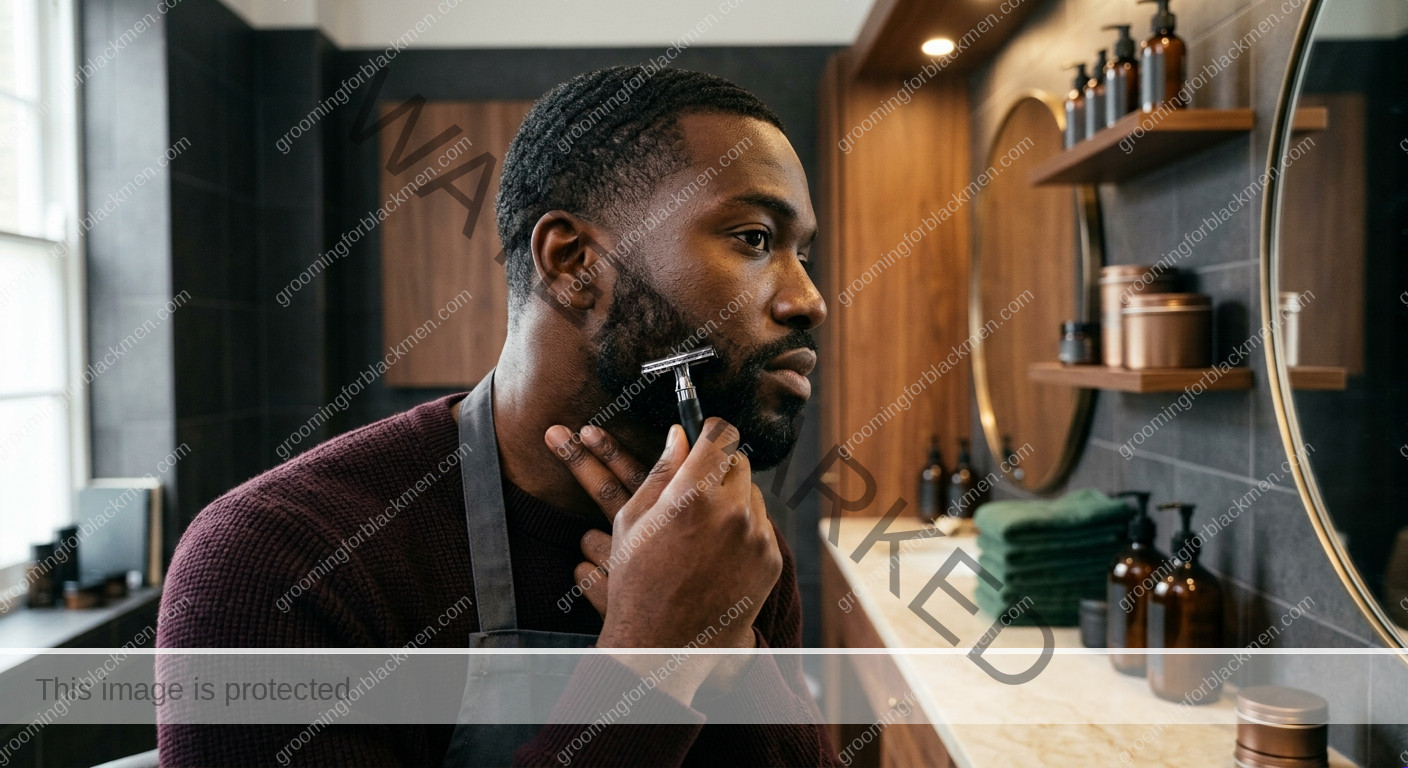
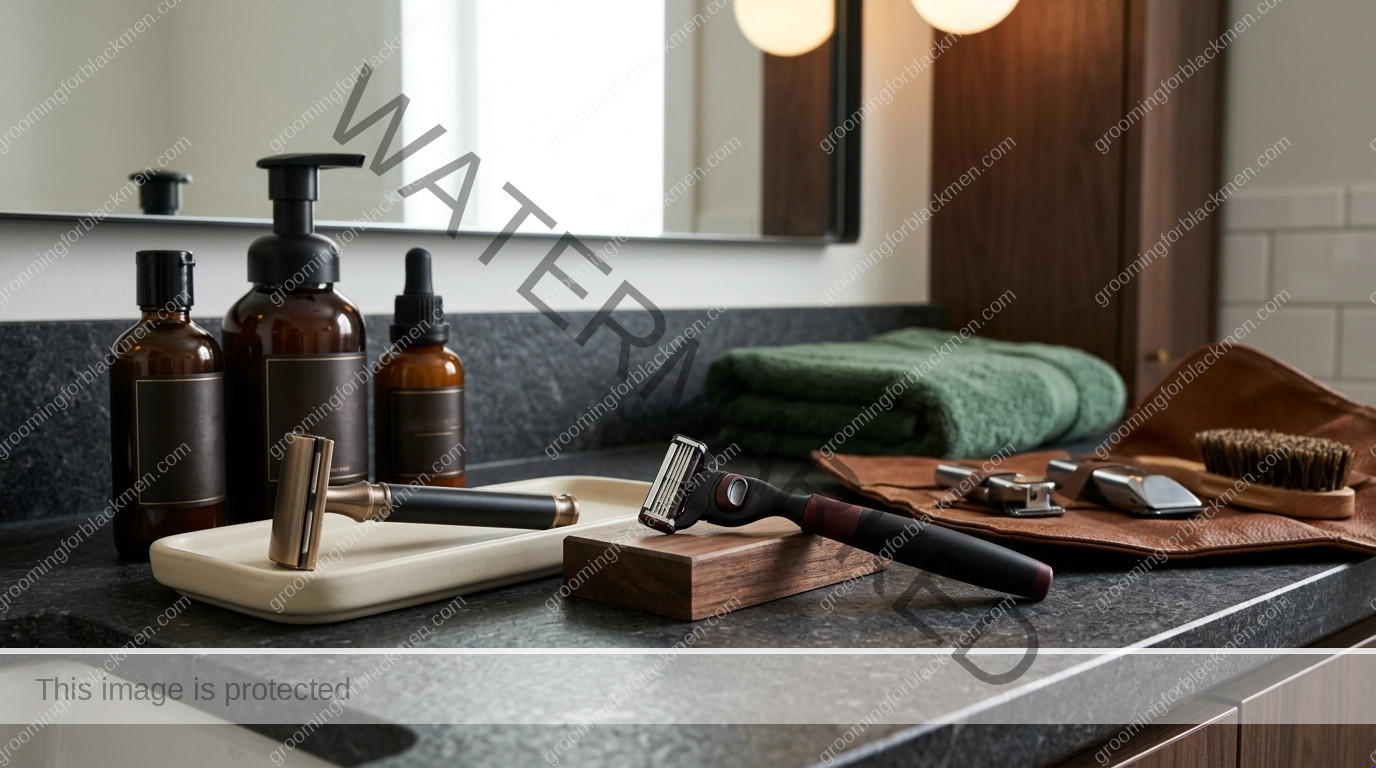
- Single blade safety razor: Look for a well-balanced, closed-comb safety razor with a non-slip handle. These razors use a single, sharp blade that you replace every few shaves. The goal is a clean cut without tugging or multiple passes. See options like this single blade safety razor for men.
Cartridge Razor Example
- Sensitive skin cartridge razor: If you prefer cartridges, choose a model with fewer blades (two or three), flexible head, and a lubricating strip. Avoid overly aggressive “extra close” models. See examples like this sensitive skin cartridge razor.
Shave Cream Example
- Sensitive-skin shave cream: Whether you use a safety or cartridge razor, a rich, non-foaming cream or gel reduces drag and cushions the skin. Avoid alcohol-heavy or heavily fragranced products. Explore options like this sensitive-skin shave cream for men.
For more vetted product picks, see our best razors and trimmers for Black men roundup.
Troubleshooting and When to Get Professional Help

Even with the best routine, bumps and irritation can happen. Here’s how to troubleshoot:
- Persistent bumps or dark marks: Try pausing shaving for a few days, switch to guarded electric trimming, and review your prep and aftercare. See our guides on razor bumps and dark marks and post-shave care.
- Frequent nicks or cuts: Slow down, use less pressure, and check your blade angle (especially with safety razors). Make sure your blades are sharp and clean.
- Redness or burning: Reduce the number of passes, avoid shaving against the grain, and use a soothing, alcohol-free aftershave.
- Ingrown hairs: Don’t dig or pluck. Use warm compresses and gentle exfoliation. See our complete guide to ingrown hairs for Black men.
When to see a professional: If you have painful, infected, spreading, or scarring bumps, or if home routines aren’t improving your skin, connect with a dermatologist or qualified clinician. Some cases require medical evaluation or prescription treatments. For more on prevention and treatment options, see our guides to razor bump prevention and ingrown hair treatment for Black men.
Frequently Asked Questions: Safety Razor vs Cartridge for Black Men
Is a safety razor really better for preventing razor bumps in Black men?
A safety razor can reduce the risk of razor bumps for many Black men because it uses a single blade that cuts hair cleanly at the surface, not below it. This lowers the chance of curly hairs re-entering the skin. However, results depend on your technique, prep, and aftercare. Switching to a safety razor isn’t a guarantee—some men still experience irritation if they rush or use too much pressure. If you’re bump-prone and willing to learn the proper routine, a safety razor is a strong option, but it’s not the only one. For some, guarded electric trimming is even lower risk.
Why do multi-blade cartridge razors cause more bumps for Black men?
Multi-blade cartridge razors are engineered for closeness. The first blade lifts the hair, and the following blades cut it even shorter—sometimes below the skin’s surface. For Black men with curly or coarse hair, this increases the odds that the hair will curl back into the skin as it grows, causing bumps and inflammation. While cartridge razors are convenient and fast, their design can work against you if you’re prone to ingrowns. Using fewer blades and avoiding “against the grain” shaving can help, but some men still do better with single-blade tools or trimmers.
Are safety razors harder to use than cartridge razors?
Yes, safety razors have a steeper learning curve. You control the angle and pressure, and there’s less forgiveness if you rush or use the wrong technique. Expect a few nicks when starting out, but most men adjust with practice. Cartridges are designed for ease and speed—just press and go. If you value convenience or are new to shaving, a cartridge may be the better starting point. If you’re disciplined and want to minimize bumps, investing time in mastering a safety razor can pay off.
What’s the best routine for sensitive, bump-prone Black skin?
Start with a warm shower or compress to soften hair. Apply a rich, non-foaming shave cream. Shave with the grain using a sharp, clean blade—whether safety or cartridge. Don’t stretch your skin or go over the same spot repeatedly. Rinse with cool water, pat dry, and use a gentle, alcohol-free aftershave. If irritation is common, consider shaving less often or switching to a guarded trimmer. For a step-by-step, see our pre-shave and post-shave guides.
How often should I replace my razor blades?
Replace safety razor blades every 3-5 shaves and cartridge blades every 5-7 shaves, or sooner if you notice tugging, drag, or rust. Dull blades increase irritation and the risk of nicks and bumps. Always rinse and dry your razor after use to prevent bacteria buildup. If you have sensitive skin or coarse hair, err on the side of more frequent blade changes. Clean, sharp blades are one of the simplest ways to reduce shaving problems.
Can I use both a safety razor and a cartridge razor in my routine?
Absolutely. Some men use a cartridge razor for quick weekday shaves and a safety razor for slower, more careful grooming on weekends. Others use a safety razor for the cheeks and a cartridge or trimmer for the neck, where bumps are more common. Mixing tools is practical and lets you tailor your approach to different parts of your face or different skin days. The key is consistency in prep, technique, and aftercare, regardless of your tool.
What should I do if I keep getting bumps no matter what razor I use?
If you’ve tried both safety and cartridge razors, adjusted your technique, and still get bumps, consider pausing shaving and switching to a guarded electric trimmer for a few weeks. Focus on gentle cleansing, warm compresses, and soothing aftershave. Don’t dig at ingrown hairs. If bumps are painful, spreading, or scarring, connect with a dermatologist. Some cases require professional care. For more strategies, see our guides on razor bump prevention and ingrown hair treatment.
What to Do Next: Building a Bump-Resistant Shave Routine
Choosing between a safety razor and a cartridge razor isn’t about chasing perfection—it’s about stacking the odds in your favor. If you’re bump-prone, consider starting slow with a safety razor, or try a cartridge with fewer blades and a sensitive-skin formula. Map your grain, keep your blades sharp, and don’t rush the process. If irritation persists, don’t hesitate to pause shaving or consult a professional.
Ready to level up your grooming? Explore these next steps:
- Deepen your understanding with our razor bumps guide.
- Fine-tune your prep with the pre-shave routine guide.
- Dial in your aftercare with our post-shave care tips.
- Compare more tools in our razor and trimmer roundup.
- Get strategy for the toughest areas with neck bumps and lineup irritation guides.
Remember: Your skin is not a problem to be fixed, but a part of you to be respected. The right razor is the one that keeps you looking sharp and feeling confident—on your terms.