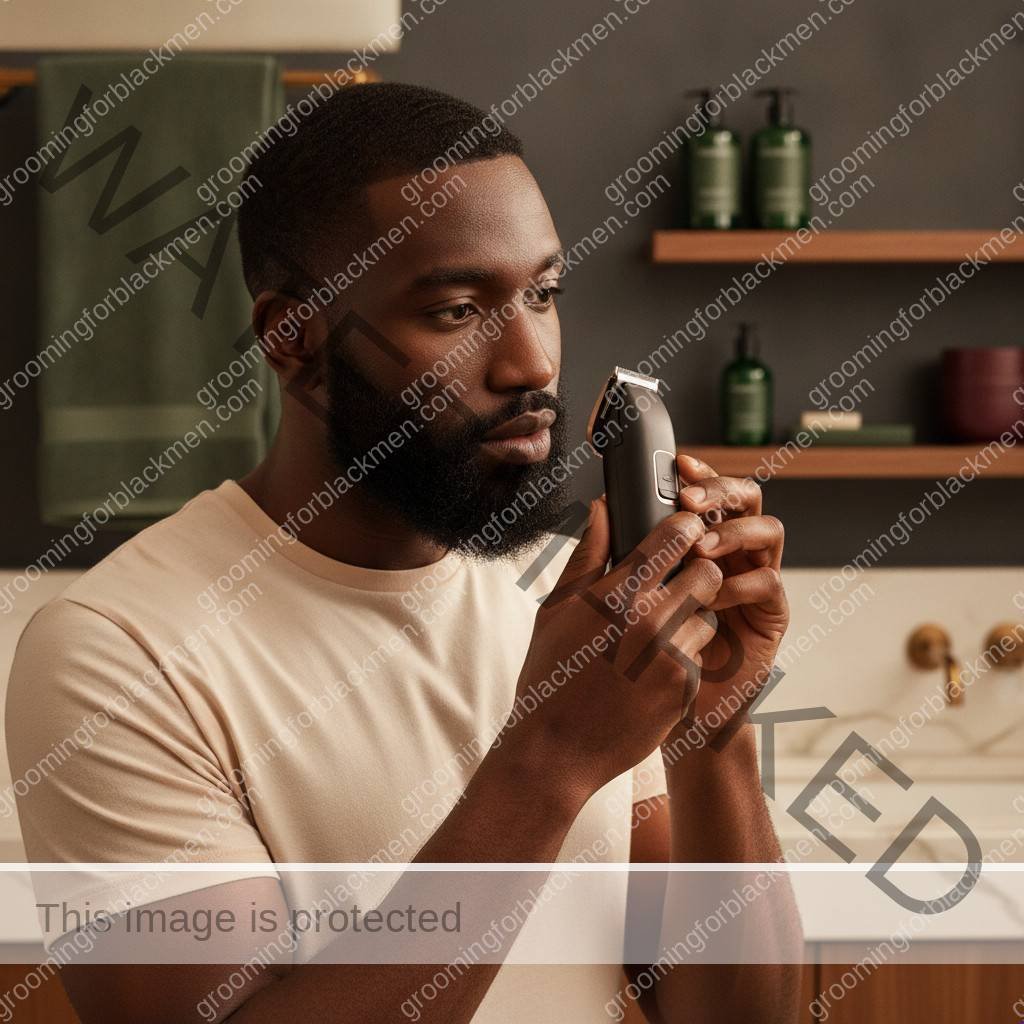
Lineups are a staple in Black men’s grooming culture—sharp, clean edges can define your entire look. But if you’re dealing with irritation along your hairline or beard line after every edge-up, you’re not alone. For many Black men, lineup irritation is more than a minor inconvenience. It can lead to bumps, dark marks, and a cycle of discomfort that makes grooming feel like a trade-off between style and skin health.
This guide is built for you: practical, direct, and anti-shame. We’re not here to judge your routine or your skin. Instead, we’ll break down why lineup irritation for Black men is so common, what makes it worse, and how to protect your hairline and beard line—whether you edge yourself or trust a barber. We’ll walk through the exact steps and decision points that matter, with real examples of products and tools that can help, not hype.
If you’re looking to understand the link between tight line-ups, razor bumps, and dark marks, you’re in the right place. This is your grounded, culturally aligned resource for keeping your lineup fresh—without sacrificing your skin.
Between-Barber Protection
Lineup irritation often builds between appointments, not only in the chair. Keep the edge clean, but do not chase tiny regrowth every morning with a bare blade. If the hairline or beard line feels tender, let it settle before another pass. Use a gentle cleanse, light moisture, and clean tools if you maintain the line at home. When a barber visit consistently leaves bumps in the same area, ask for a less aggressive edge-up or a guarded finish instead of assuming your skin just has to tolerate it.
How to Talk to Your Barber About It
A good barber can adjust the finish when you explain what happens after the appointment. Be specific. Say whether the irritation shows up along the front hairline, temples, beard line, or neck, and whether it appears the same day or two days later. Ask for less pressure, cleaner tool passes, or a guarded finish in the areas that react. This is not about lowering standards; it is about getting a sharp look without repeatedly injuring the same skin. If a technique keeps causing bumps, the routine needs adjustment.
The goal is a line that still looks intentional after the skin calms down, not an edge so aggressive that it starts another cycle of bumps.
Protecting that skin is part of staying sharp.
Field-Test This Routine Before You Judge It
When it comes to lineup irritation for Black men, no two heads—or beards—are the same. You might have that classic, tight coily hairline, a patchy cheek zone, or a neck that flares up at the first sign of a trimmer. The key is to develop a lineup routine that respects your skin and hair’s unique needs, not just what your barber or Instagram says is “clean.” Below is a practical, field-tested routine designed for real life—rushed mornings, last-minute barber appointments, and everything in between. Take it step by step, adjust for your own experience, and don’t be afraid to tweak what doesn’t work. Your hairline and beard line will thank you.
1. Pre-Edge-Up Prep: The Foundation
- Hydrate and Soften: Before any blade or trimmer touches your skin, hydration is non-negotiable. Splash your face and hairline with warm water, or use a warm, damp washcloth for 1-2 minutes. This softens coarse, curly hair and preps the skin, reducing tugging and microtears.
- Cleansing Matters: Wash your face, beard, and hairline with a gentle, fragrance-free cleanser. Sweat, oils, and product buildup can trap bacteria, making irritation and bumps more likely after a lineup.
- Pre-Shave Oil (Optional): For men prone to razor bumps or dry skin, a thin layer of non-comedogenic oil (like grapeseed or jojoba) can add protection. Don’t overdo it—too much oil can clog clippers and trimmers.
2. Tool Hygiene: Non-Negotiable for Black Men’s Skin
Dirty tools are a silent enemy, especially for Black men with curly or coarse hair. Bacteria, dead skin, and old hair trapped in blades can turn a simple lineup into a week of bumps and dark marks. Here’s how to keep your edge-up tools in check:
- Home Clippers/Trimmers: Brush out hair after each use. Once a week, clean blades with alcohol or a dedicated blade spray. Let them dry fully before storing.
- Barber Visits: Don’t be shy—ask your barber how they clean their tools. A quality barber will respect your skin and use disinfected clippers and liners every time. If you see them skip this step, speak up or find another chair.
- Replace Blades Regularly: Dull blades tug and nick, especially on curly hair. Change them as soon as you notice more pulling or uneven cuts.
3. The Lineup: Technique Over Tightness
That ultra-sharp, super-tight lineup looks crisp for a day—but it often comes at the cost of irritation, bumps, and eventual dark marks. Here’s how to get a clean look without sacrificing your skin:
- Don’t Chase Perfection: Leave a millimeter buffer between the blade and the absolute edge of your natural hairline. This prevents repeated trauma to the same follicles and skin cells.
- Never Dry Shave: Always use a bit of moisture, even if it’s just a splash of water. Dry shaving on coarse, curly hair is a recipe for razor bumps and micro-abrasions.
- Light Pressure Only: Let the tool do the work. Pressing too hard increases the risk of cuts and ingrown hairs, especially on the neck and temple areas.
- Follow the Grain: When cleaning up the beard line or neck, move the trimmer in the direction your hair grows. This reduces irritation and prevents ingrowns.
- Rushed Mornings: If you’re short on time, skip the edge-up and just brush or comb your hairline/beard into place. Overlining on a rushed day is a fast track to irritation.
4. Aftercare: Calm and Protect
What you do after the lineup is just as important as the cut itself. The goal is to soothe, hydrate, and protect your skin from bumps, dark marks, and infection.
- Rinse with Cool Water: This closes pores and calms inflammation. Pat dry with a clean towel—don’t rub.
- Apply a Gentle, Alcohol-Free Toner: Witch hazel or a fragrance-free toner helps reduce redness without stinging or drying out your skin.
- Moisturize: Use a lightweight, non-comedogenic moisturizer or beard oil. This keeps the skin barrier strong and helps prevent dark marks from forming.
- Spot Treat Small Cuts: If you nick yourself, dab with a clean tissue and apply a dab of antibiotic ointment. Don’t pick at scabs or bumps.
- Watch for Bumps or Persistent Irritation: If you see painful, inflamed, or pus-filled bumps, or if dark marks keep spreading, pause your lineup routine and see a dermatologist or clinician. Don’t try to “cut through” irritation—it only makes things worse.
5. Real-World Adjustments: When Life Gets in the Way
Let’s be real—Black men don’t always have the luxury of a slow, careful lineup. Here’s how to adjust your routine without wrecking your hairline or beard line:
- Barber Frequency: If you’re seeing your barber every week and your hairline is always red or bumpy, stretch it out to every 2-3 weeks. In-between, use a soft brush and edge-control product to keep things neat without more cutting.
- Coarse/Curly Beard Growth: For patchy or curly beards, avoid lining up every stray hair. Focus on the main outline and let the rest fill in naturally. Over-trimming leads to ingrowns and uneven growth.
- Neck Sensitivity: The neck is the most common spot for bumps and dark marks. Use clippers (not a razor) and never go over the same spot more than twice. If your neck always flares up, consider letting that area grow out or using a fade instead of a sharp line.
- Dark Marks: Consistent irritation leads to hyperpigmentation. If you notice dark marks, take a break from lineups and focus on gentle exfoliation (once a week) and daily moisturization. For persistent marks, check out our guide to fading dark spots for Black men.
6. Table: Quick-Reference Lineup Do’s & Don’ts
| Do | Don’t |
|---|---|
| Hydrate skin and hair before every lineup | Dry shave or line up without prep |
| Clean and disinfect tools every use | Use dirty or dull clippers/trimmers |
| Use light pressure and follow the grain | Press hard or go against the grain |
| Leave a buffer—don’t overline | Chase a super-tight, unnatural line |
| Moisturize and soothe after every lineup | Ignore redness, bumps, or dark marks |
| See a dermatologist for persistent issues | Try to “cut through” irritation or infection |
7. When to Hit Pause and Get Help
Sometimes, irritation gets out of hand—painful bumps, pus, scarring, or spreading dark marks. Don’t ignore these signs. If your lineup routine keeps causing problems or things aren’t getting better, it’s time to pause and consult a dermatologist or clinician who understands Black men’s skin and hair. Early help can prevent permanent hair loss and scarring.
8. Level Up: Protect Your Investment
Your hairline and beard line are an investment—don’t let impatience or peer pressure ruin them. Build a routine that fits your lifestyle, but always put skin health first. For more advanced tips on maintaining your edge and handling common Black men’s grooming challenges, check out our Barber Shop Etiquette for Black Men guide.
Bottom line: Don’t just copy what works for someone else. Field-test, adjust, and protect your lineup. Your future self—and your hairline—will appreciate the effort.
Why Lineup Irritation Happens for Black Men
The sharpness of your edge-up should never come at the expense of your skin’s health. Black men’s hair is uniquely textured—coarse, curly, and often tightly coiled. This structure means that when hair is cut close to the skin, especially with a razor or trimmer, the short ends can curl back and re-enter the skin. This triggers irritation, inflammation, and sometimes razor bumps (pseudofolliculitis barbae).
The skin along the hairline and beard line is particularly sensitive. Frequent edge-ups, especially with close-cutting tools, can strip away protective oils, cause micro-cuts, and disrupt the natural barrier. Add to this the reality that many barbershops prioritize sharpness and speed, sometimes at the expense of gentleness or sanitation, and you have a perfect storm for lineup irritation.
For more on the science behind razor bumps and shaving systems, see our complete guide to razor bumps for Black men.
What Makes Lineup Irritation Worse?

Understanding the triggers is the first step to protecting your skin. Here’s what consistently makes lineup irritation for Black men more likely and more severe:
- Tight, overly sharp line-ups: Going for the crispiest edge often means shaving below the natural hairline or beard line, increasing the risk of ingrown hairs and bumps.
- Dry shaving: Shaving or edging without softening the hair or using lubrication increases friction and micro-cuts.
- Dirty or dull tools: Clippers, trimmers, or razors that aren’t cleaned or replaced regularly can introduce bacteria and drag against the skin.
- Frequent barber visits: Weekly or bi-weekly edge-ups don’t give your skin time to recover, especially if the process is aggressive each time.
- Improper aftercare: Skipping post-shave routines or using harsh, alcohol-based products can dry out and irritate the skin further.
- Ignoring hair growth patterns: Not mapping your grain—especially around the edges—means you’re more likely to shave against the curl, raising the risk for irritation and bumps.
If you’re struggling with bumps or dark marks after shaving, learn about razor bumps and dark marks for Black men for more in-depth strategies.
The Practical Routine: Protecting Your Hairline and Beard Line

As an affiliate site, GFBM may earn from qualifying purchases through product links.
A disciplined, practical approach is the best way to keep your lineup fresh and your skin protected. Here’s a step-by-step framework to minimize lineup irritation for Black men—whether you edge up at home or in the barbershop.
1. Map Your Grain and Natural Line
- Before you start, run your fingers across your hairline and beard line to feel the direction of hair growth. This is your “grain.”
- Plan to edge up with the grain or, at most, across—not against. This reduces the risk of hair re-entering the skin.
- Stick as close as possible to your natural line. Avoid pushing the lineup further back or lower than necessary.
- For a detailed walkthrough, see how to map your grain for Black men and our grain-mapping guide.
2. Prep: Soften and Cleanse
- Wash your face and hairline with a gentle facial cleanser to remove dirt, oil, and product buildup.
- Warm water or a damp towel can help soften the hair and open pores, making trimming or shaving less abrasive.
- Never dry shave. If you’re using a razor, apply a non-irritating shave gel or cream before edging up.
- For a full pre-shave breakdown, check our pre-shave routine for Black men.
3. Use Clean, Sharp Tools
- Disinfect clippers, trimmers, and razors before every use. At home, a clipper cleaning spray is a practical way to minimize bacteria.
- Replace or sharpen blades regularly. Dull blades drag and increase the risk of nicks and bumps.
- At the barbershop, don’t be afraid to ask about tool sanitation. Your skin’s health is worth the question.
- See our guide to the best razors and trimmers for Black men for tool recommendations.
4. Technique: Gentle, Minimal Passes
- Use short, light strokes. Avoid pressing too hard or going over the same spot repeatedly.
- Don’t stretch the skin excessively. This can cause hair to retract below the surface and increase the risk of ingrown hairs.
- If you’re using a razor, always shave with the grain and rinse the blade often.
- For trimmer routines tailored to Black men, see our trimmer routine guide and electric trimmer best practices.
5. Aftercare: Calm and Protect
- Rinse your hairline and beard line with cool water to close pores and reduce inflammation.
- Pat dry with a clean towel—never rub aggressively.
- Apply an alcohol-free aftershave balm or gentle moisturizer to soothe the skin.
- Avoid heavy oils or pore-clogging products immediately after shaving.
- For more on post-shave care, see our post-shave care guide for Black men.
6. Frequency and Recovery
- Give your skin time to recover between edge-ups. If you’re seeing irritation, consider spacing out your lineups or switching to guarded trimmers.
- Alternate between sharp line-ups and softer, less frequent touch-ups as needed.
- For persistent bumps or dark marks, see our dark marks guide and ingrown hair strategies.
Product and Tool Examples for Lineup Irritation
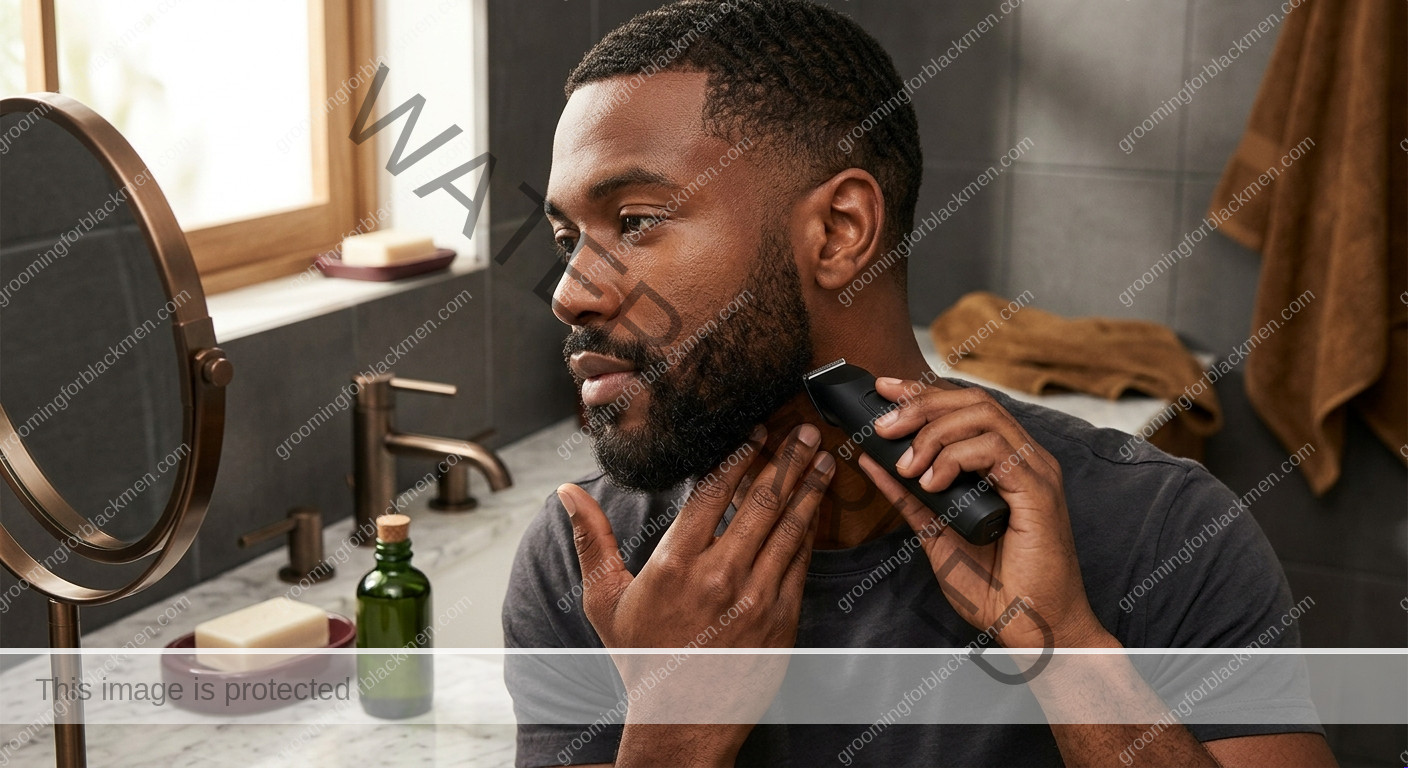

This section includes affiliate links. GFBM may earn a commission if you purchase through these links, at no extra cost to you. These are examples, not guarantees or cures—always choose products that fit your skin’s needs.
- Clipper/trimmer disinfectant: A clipper cleaning spray helps keep your tools clean and minimizes bacteria. Essential for both home and barbershop use.
- Gentle facial cleanser: Keeping your skin clean before and after a lineup reduces the risk of irritation. Try a gentle facial cleanser designed for sensitive skin.
- Alcohol-free aftershave balm: After shaving or trimming, an alcohol-free aftershave balm soothes without stinging or drying out your skin.
For more on choosing the right grooming products, see our razors and trimmers guide and shaving for sensitive skin.
Comparison Table: Home vs. Barber Lineups for Sensitive Skin
| Factor | Home Lineup | Barber Lineup |
|---|---|---|
| Tool Sanitation Control | High (you control cleaning) | Variable (depends on barber) |
| Frequency | Flexible, on your schedule | Set by appointment/barber hours |
| Technique Adjustment | Can adjust for sensitivity | May prioritize sharpness over gentleness |
| Skill Required | Practice needed for clean lines | Professional finish, less learning curve |
| Cost | Initial investment, lower long-term | Recurring expense |
| Skin Recovery Time | Can space out as needed | Often on a fixed schedule |
For more on choosing between safety razors, cartridges, and electric shavers, see our comparison guide and electric shaver resource.
Troubleshooting and When to Get Professional Help

Even with the best routine, lineup irritation for Black men can still happen—especially if your skin is sensitive or you’re prone to bumps. Here’s how to troubleshoot common issues and know when it’s time to see a professional.
- Small bumps or redness: Pause shaving or trimming for a few days. Stick to gentle cleansing and moisturizing. Avoid picking or digging at bumps.
- Dark marks forming: Protect the area from sun exposure and avoid harsh products. For more, see our guide to razor bumps and dark marks.
- Painful, spreading, or infecte
d bumps:
If bumps are painful, pus-filled, or not improving, consult a dermatologist or qualified clinician. Some cases require professional care to prevent scarring. - Persistent irritation: If you’re consistently irritated after every lineup, consider switching to guarded electric trimming, spacing out edge-ups, or seeking advice from a grooming-focused barber.
- Scarring or keloids: If you notice thickened, raised scars along the hairline, get evaluated by a skin specialist before continuing aggressive edge-ups.
For more troubleshooting tips, see our ingrown hair guide and sensitive skin shaving resource.
Frequently Asked Questions
How can I tell if my lineup irritation is just mild or needs a dermatologist?
Mild lineup irritation usually shows up as slight redness, itching, or a few small bumps that resolve in a few days with gentle care and by pausing edge-ups. If you notice pain, pus, swelling, spreading bumps, or if irritation lasts beyond a week despite adjusting your routine, it’s time to consult a dermatologist or a qualified clinician. Persistent dark marks or thickened scars (like keloids) around your hairline are also signs to get professional advice. When in doubt, prioritize your skin’s health over a perfect lineup—there’s no shame in seeking expert help.
What’s the best way to clean my trimmers or clippers at home?
Start by brushing away loose hair after each use. Spray the blades with a clipper cleaning spray to disinfect and prevent bacteria buildup. Let the spray sit for the recommended time, then wipe off any excess. Oil the blades as directed by the manufacturer to keep them sharp and reduce friction. Never use dirty or rusty tools on your skin. For more on tool hygiene and blade care, see our razor and trimmer maintenance guide.
Should I avoid sharp line-ups if I’m prone to bumps?
If you’re prone to bumps, it’s wise to prioritize your natural hairline and avoid pushing the lineup too far back or lower than necessary. Sharp, drastic lineups often require shaving against the grain or stretching the skin, both of which increase irritation risk. Consider softer, less frequent touch-ups or using a guarded trimmer instead of a razor for the edge. For more, see our trimmer routine guide and razor bump prevention strategies.
Are alcohol-based aftershaves bad for lineup irritation?
Alcohol-based aftershaves can sting and dry out the skin, which may worsen irritation, especially for Black men with sensitive or dry skin. Instead, choose an alcohol-free aftershave balm or a gentle moisturizer. These products help soothe and hydrate without the harshness. For more on post-shave care, see our post-shave care guide.
How often should I get a lineup to minimize irritation?
There’s no universal answer, but spacing out your lineups—every two weeks or longer—gives your skin time to recover. If you notice irritation, bumps, or dark marks, consider extending the time between edge-ups or switching to a less aggressive technique. Some men benefit from alternating between sharp line-ups and softer, natural touch-ups. Listen to your skin and adjust as needed. For more on balancing frequency and skin health, see our razor bump prevention guide.
Can I use the same routine for my beard line and hairline?
The principles are similar—gentle cleansing, mapping your grain, using clean/sharp tools, and soothing aftercare—but the beard area may be more prone to ingrown hairs due to thicker, curlier hair. Pay extra attention to technique and avoid shaving too close or against the grain on your beard line. For a more tailored approach, see our neck bumps guide and sensitive skin shaving tips.
What’s the safest tool for edge-ups if I have sensitive skin?
A guarded electric trimmer is often the safest option for sensitive skin, as it cuts hair above the skin level and reduces the risk of nicks, bumps, and ingrown hairs. Avoid open razors or ultra-close shavers unless you’re experienced and your skin tolerates it. Always keep tools clean and sharp. For tool comparisons and recommendations, see our safety razor vs cartridge guide and electric shaver review.
What to Do Next
Protecting your hairline and beard line from lineup irritation is about discipline, not perfection. Start by mapping your grain, upgrading your prep and aftercare, and using clean, sharp tools. If you edge up at home, invest in sanitation and practice gentle technique. If you visit a barber, don’t hesitate to ask about tool hygiene and request a less aggressive edge-up if you’re prone to irritation.
If you’re dealing with persistent bumps, dark marks, or scarring, prioritize your skin’s health and consult a professional when needed. For more advanced strategies, explore our guides on razor bump prevention, ingrown hair treatment, and sensitive skin shaving.
Your lineup is part of your identity—but your skin deserves respect and protection, too. Stay sharp, stay disciplined, and keep grooming on your terms.