
Shaving with sensitive skin as a Black man isn’t just about comfort—it’s about protecting your face from burning, bumps, and long-term marks. If you’ve ever finished a shave only to feel stinging, see redness, or notice new bumps the next day, you’re not alone. Black men’s facial hair is unique: it’s often coarse, curly, and grows in multiple directions, making it especially prone to razor bumps and irritation. Add sensitive skin to the mix, and a “routine” shave can feel like a minefield.
This guide is built for you—the man who wants a clean, intentional look but refuses to sacrifice his skin’s health. No shame, no blame, no empty promises. Just a grounded, premium approach to sensitive skin shaving for Black men: practical steps, real product examples, and a disciplined routine that respects your skin’s needs. Whether you’re dealing with burning, dryness, or those stubborn ingrown hairs, this article lays out a clear, culturally aligned path forward.
Let’s break down why these challenges happen, what makes them worse, and how to build a shaving routine that protects your skin—while still keeping your look sharp and intentional.
Field-Test This Routine Before You Judge It
If you’ve ever left the house with your face burning, itching, or dotted with angry bumps after a shave, you know: sensitive skin shaving for Black men is a different game. The goal isn’t just to look sharp—it’s to protect your skin’s barrier, avoid triggering irritation, and still walk out feeling confident and intentional. Below, you’ll find a no-nonsense, real-world shaving routine built for our unique hair texture, skin tone, and daily realities. Don’t just read it—test it for yourself. Adjust, refine, and own it.
1. Rushed Mornings: The 5-Minute Sensitive Skin Rescue
Life moves fast, and sometimes you’re staring down the clock with barely enough time to get out the door. Here’s how to minimize damage when you can’t do the full spa treatment:
- Skip the hot water shock: Use lukewarm water to splash your face—hot water strips natural oils and worsens dryness.
- Pre-shave oil matters: Even if you’re short on time, apply a thin layer of fragrance-free pre-shave oil. It creates slip and shields reactive skin from the blade.
- Use a gentle cleanser, not bar soap: Bar soap can dry and irritate. Go for a mild, non-foaming cleanser to remove overnight sweat and oil.
- Shave in the direction of hair growth: Don’t try to get baby-smooth—one gentle pass is better than two rushed, aggressive ones.
- Pat dry, don’t rub: Use a clean towel and pat your face—rubbing increases redness and microtears.
- Seal in moisture: Finish with a lightweight, fragrance-free moisturizer or post-shave balm. If you have dark marks, choose one with niacinamide or licorice root extract.
Remember: In a rush, less is more. Prioritize protection over perfection. If you’re consistently short on time, consider trimming instead of shaving daily to reduce irritation.
2. Barber Visits: Advocate for Your Sensitive Skin
Not every barber is trained for sensitive skin shaving for Black men. Don’t be shy about speaking up:
- Communicate your needs: Tell your barber up front about your skin sensitivity, history of bumps, or fragrance allergies.
- Ask about tool hygiene: Ensure clippers, razors, and brushes are sanitized between clients. Dirty tools = higher risk of breakouts and infections.
- Request single-use blades: If your barber uses a straight razor, ask for a fresh blade. Reused blades can introduce bacteria and trigger flare-ups.
- Skip the aftershave splash: Many barbershops use alcohol-based aftershaves that sting and dry out skin. Ask for a fragrance-free balm or bring your own.
- Observe technique: Watch how your barber shaves your neck and jawline—these are high-risk areas for ingrowns. Ask for with-the-grain passes only.
If you leave the chair with burning or redness, rinse with cool water at home and apply a calming moisturizer. If symptoms persist, consult a dermatologist.
3. Coarse, Curly Beard Growth: Work With, Not Against, Your Grain
Our hair grows in curves, zig-zags, and tight coils. That’s beautiful—but it means shaving can drive hairs back into the skin, causing bumps and inflammation. Here’s how to adapt:
- Map your grain: Use your fingers to feel which direction your facial hair grows in each area. It’s rarely straight down—note the curves on your cheeks, jaw, and especially the neck.
- Shave with the grain (WTG): Always start with the grain, even if it leaves a little stubble. If you need a closer shave, go across the grain (XTG), never against (ATG).
- Don’t chase smoothness: For sensitive skin, a shadow is better than a breakout. Accept a little texture for long-term skin health.
- Hydrate and soften: Before shaving, soak a towel in warm (not hot) water and hold it against your face for 1-2 minutes. This softens coarse hairs and opens pores.
- Use a protective barrier: Thick, unscented shave creams or gels are best. Avoid foams with heavy fragrances or alcohol.
Still struggling with bumps? Check out our ingrown hair solutions guide for advanced strategies.
4. Neck Sensitivity: The High-Risk Zone
The neck is where most Black men experience burning, stinging, and razor bumps. Here’s how to defend it:
- Don’t overstretch the skin: Pulling the skin tight can make hairs snap back below the surface, increasing ingrown risk.
- Short, gentle strokes: Use light pressure and rinse the blade after every pass to avoid dragging dead skin and oil.
- Minimal passes: One pass is usually enough. Multiple passes over sensitive neck skin = more irritation.
- Cool down immediately: After shaving, splash your neck with cool water to calm redness and close pores.
- Apply a barrier balm: Look for a fragrance-free, non-comedogenic balm or ointment to lock in moisture and protect from friction.
If you notice persistent redness, bumps, or pain on your neck, take a break from shaving for a few days and consult a skin specialist if symptoms worsen.
5. Managing Dark Marks and Post-Shave Discoloration
Hyperpigmentation is a real concern—every nick, bump, or burn can leave a mark. Here’s how to minimize and manage dark spots:
- Prevent trauma: The less irritation during shaving, the fewer marks after. Use sharp blades and gentle technique.
- Moisturize daily: Hydrated skin heals faster and is less likely to scar. Use products with niacinamide, vitamin C, or licorice root for brightening.
- Sun protection: UV exposure darkens marks. Use a broad-spectrum sunscreen (SPF 30+) daily, even if you’re inside most of the day.
- Spot treat carefully: For stubborn marks, try targeted serums (no hydroquinone without a doctor’s supervision). Avoid harsh scrubs or peels that can worsen sensitivity.
- Be patient: Skin tone evens out over weeks, not days. Stick to your routine and avoid picking or scratching healing areas.
If you develop new, rapidly spreading, or painful marks, see a dermatologist for assessment and tailored care.
6. Tool Hygiene: Protect Your Skin from Unseen Enemies
Dirty tools can sabotage even the best shaving routine. Here’s how to keep your gear clean and your skin safer:
- Rinse after every use: Run your razor or trimmer under hot water to remove hair, oil, and product residue.
- Disinfect weekly: Soak blades and guards in isopropyl alcohol for 5-10 minutes. Air dry completely before storing.
- Replace blades often: Dull blades tug at hair and cause more trauma. For cartridge razors, swap every 5-7 shaves; for safety razors, every 2-3 shaves.
- Store dry: Keep tools in a dry, ventilated area to prevent bacteria and mold growth.
- Don’t share: Never use someone else’s razor or trimmer—cross-contamination is real.
If you notice breakouts or infections after shaving, pause your routine and seek medical advice if symptoms persist or worsen.
7. Adjusting Your Routine Without Overreacting
It’s tempting to overhaul everything at the first sign of a bump or burn, but sensitive skin shaving for Black men is about steady, mindful tweaks—not panic moves. Here’s how to adjust:
- Change one thing at a time: If you’re having issues, swap out a single product or tool and observe for a week before making another change.
- Track your triggers: Keep a simple note on your phone—did you use a new blade, product, or technique? Patterns will emerge.
- Don’t over-exfoliate: Scrubs and acids can worsen irritation. Limit exfoliation to once a week and use gentle, fragrance-free formulas.
- Listen to your skin: Tightness, burning, or stinging means your barrier is compromised. Scale back, add more moisture, and give your skin time to recover.
- Consult a pro: If you’re dealing with persistent, painful, or worsening symptoms (especially infection or scarring), see a dermatologist or clinician. Self-diagnosis can make things worse.
Remember, your skin is unique. What works for your brother or favorite influencer may not work for you. Respect your skin’s feedback and adjust with intention.
Sample Sensitive Skin Shaving Routine for Black Men
| Step | What to Do | Why It Matters |
|---|---|---|
| 1. Cleanse | Use a gentle, fragrance-free cleanser | Removes oil and sweat without stripping moisture |
| 2. Pre-Shave Oil | Apply a thin layer, let it soak for 1 min | Reduces friction, protects skin barrier |
| 3. Shave Cream/Gel | Use a thick, unscented formula | Cushions blade, prevents nicks and irritation |
| 4. Shave | Shave with the grain, using light pressure | Minimizes ingrowns and trauma |
| 5. Rinse | Use cool water to remove residue | Soothes skin, closes pores |
| 6. Moisturize | Apply fragrance-free moisturizer or balm | Locks in hydration, calms post-shave tightness |
| 7. Sun Protection | Apply SPF 30+ if going outside | Prevents dark marks from getting darker |
Real-World Tweaks for Your Unique Skin
- If you have fragrance sensitivity: Stick to unscented or hypoallergenic products. Avoid essential oils and “cooling” menthols.
- If you get post-shave dryness: Layer a hydrating serum under your moisturizer, and avoid alcohol-based toners or aftershaves.
- If you’re prone to bumps: Limit shaving to 2-3 times per week, and consider an electric foil shaver designed for sensitive skin.
- If you notice tightness or stinging: Check for hidden alcohol, witch hazel, or harsh preservatives in your products.
- If you want a barber-fresh look at home: Invest in a quality trimmer for shape-ups and line work, and follow up with your sensitive skin routine.
For more tips on grooming gear and techniques, see our best shaving tools guide.
Bottom Line: Respect the Process, Respect Your Skin
Shaving with sensitive skin as a Black man isn’t about shortcuts—it’s about intention, consistency, and respect for your unique skin. Protect your barrier, stay vigilant with hygiene, and don’t be afraid to advocate for yourself at the barbershop or doctor’s office. If you run into persistent pain, worsening bumps, or scarring, get professional help. Your skin deserves it.
Why Sensitive Skin Shaving Is Different for Black Men
Black men’s facial hair is distinct in texture and growth pattern. Most Black men have curly or tightly coiled hair, which grows at an angle and can easily curl back into the skin after shaving. This can lead to razor bumps (pseudofolliculitis barbae), ingrown hairs, and chronic irritation. Sensitive skin adds another layer—meaning your skin is more reactive to friction, products, and environmental factors. The result? Shaving can trigger burning, stinging, redness, bumps, dryness, and even post-shave tightness.
Here’s why these issues are more common:
- Curly/coarse hair: More likely to re-enter the skin after cutting, causing inflammation and bumps. Learn more about razor bumps in Black men.
- Multiple growth directions: Hair on the face and neck often grows in swirls or at sharp angles, making “shaving with the grain” more complicated. See how to map your grain for Black men.
- Reactive skin barrier: Sensitive skin reacts quickly to shaving friction, fragrances, alcohol, and harsh chemicals, leading to burning, redness, and dryness.
- Post-inflammatory hyperpigmentation: Even minor irritation can leave dark marks, which are more visible on melanin-rich skin. For support, read razor bumps and dark marks for Black men.
Understanding these factors is the first step toward shaving in a way that protects both your skin and your look.
What Makes Sensitive Skin Shaving Worse?
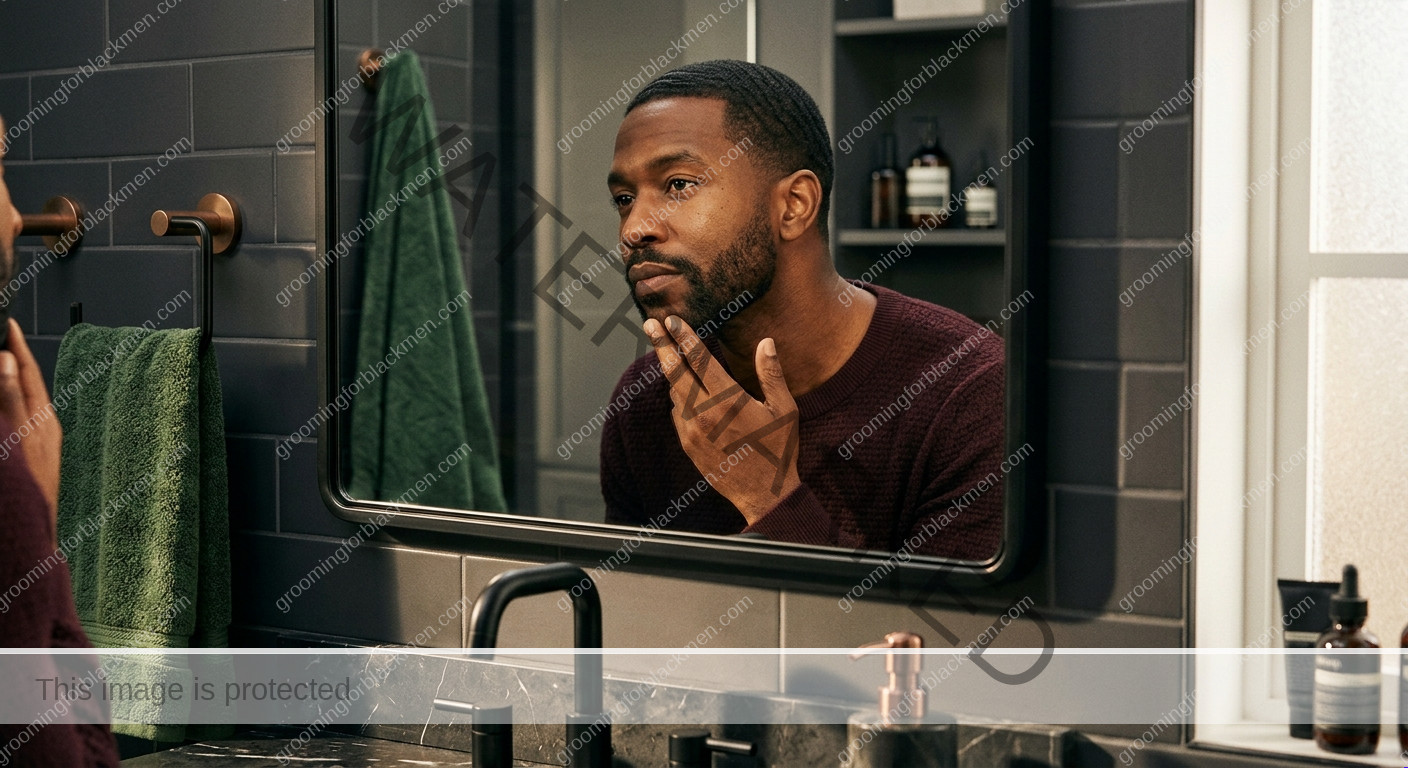
Not all irritation is inevitable. Certain habits, tools, and products can make things worse for Black men with sensitive skin. Here’s what to watch out for:
- Dry shaving or skipping prep: Shaving dry or without softening the hair increases friction and trauma.
- Using harsh, fragranced products: Strong scents, alcohol, and menthol can trigger burning, stinging, and redness.
- Old, dull, or dirty blades: These tug at hair and increase the risk of nicks, bumps, and infection. See best razors and trimmers for Black men.
- Shaving against the grain: This cuts hair too short, making it more likely to curl back into the skin, especially on the neck and jawline. Learn about mapping your grain.
- Skin stretching or multiple passes: Pulling skin tight or going over the same area repeatedly increases irritation and the chance of bumps.
- Skipping post-shave care: Not moisturizing or using harsh aftershaves can leave skin dry and tight, making irritation worse. Explore post-shave care for Black men.
Recognizing these pitfalls is crucial. With the right routine and products, you can minimize irritation and keep your skin looking its best.
Building a Sensitive Skin Shaving Routine: A Practical Framework
There’s no single “right” way to shave for every Black man, but a disciplined, step-by-step approach gives you the best shot at a smooth, irritation-free result. Here’s a practical routine designed to protect sensitive, reactive skin while maintaining a clean, intentional look.
1. Map Your Grain
Before you even pick up a razor, understand how your hair grows. Use your fingers to feel the direction of growth on your cheeks, jawline, chin, and neck. Shave in the direction your hair grows (“with the grain”) to reduce the risk of bumps and irritation. For a detailed guide, see how to map your grain as a Black man.
2. Pre-Shave Preparation
- Cleanse: Use a gentle, fragrance-free cleanser to remove oil, dirt, and sweat. Avoid harsh scrubs.
- Soften hair: Shave after a warm shower, or apply a warm, damp towel to your face for 2-3 minutes to soften hair and open pores.
- Pre-shave oil (optional): A lightweight, fragrance-free oil can add extra glide and cushion, but skip if you’re sensitive to oils. See pre-shave routine for Black men for more tips.
3. Choose the Right Tool
Your choice of razor or trimmer matters. Sensitive skin and curly hair often respond best to guarded, single-blade razors or quality electric shavers. Multi-blade cartridges can cut hair too short and increase the risk of bumps. See the comparison below for more detail, and explore best razors and trimmers for Black men.
| Shaving Tool | Pros | Cons | Best For |
|---|---|---|---|
| Single-blade safety razor | Minimal passes, less irritation, easy to clean | Requires skill, not ideal for rushed shaves | Sensitive skin, close shaves, experienced users |
| Quality electric shaver | No direct blade on skin, quick, low risk of cuts | Not as close as a blade, can cause heat irritation | Very sensitive skin, fast routines, bump-prone areas |
| Guarded trimmer | Leaves hair slightly above skin, lowest bump risk | Not a “baby smooth” finish | Severe bump history, everyday maintenance |
| Multi-blade cartridge | Widely available, fast, close shave | Can cut hair below skin, higher bump risk | Less sensitive skin, careful technique |
For more on this decision, see safety razor vs cartridge for Black men and trimmer routines for Black men.
4. Use a Protective Shave Cream or Gel
- Choose a thick, fragrance-free shave cream or gel for maximum cushion and minimal irritation.
- Avoid menthol, alcohol, and strong scents—they can trigger burning and redness.
- Apply with your hands or a soft, clean brush (if your skin tolerates it).
5. Shave With Discipline
- Shave with the grain—never against it, especially on the neck and jawline.
- Use light pressure and let the blade do the work. Don’t press down or stretch your skin.
- Limit to one or two passes maximum. More passes = more irritation.
- Rinse the blade after every stroke to prevent buildup.
6. Rinse and Soothe
- Rinse with cool water to calm the skin and close pores.
- Pat dry gently with a clean towel—don’t rub.
7. Post-Shave Care
- Apply a fragrance-free, alcohol-free aftershave balm or soothing moisturizer to lock in hydration and reduce tightness.
- Look for ingredients like aloe, oat, or ceramides. Avoid alcohol, menthol, and strong fragrances.
- If you’re prone to dark marks, use a gentle, non-comedogenic moisturizer daily. For more, see post-shave care for Black men.
8. Clean Your Tools
- Rinse razors and trimmers thoroughly after each use and let them dry completely.
- Replace blades regularly—dull blades cause more irritation and bumps.
Product and Tool Examples for Sensitive Skin Shaving

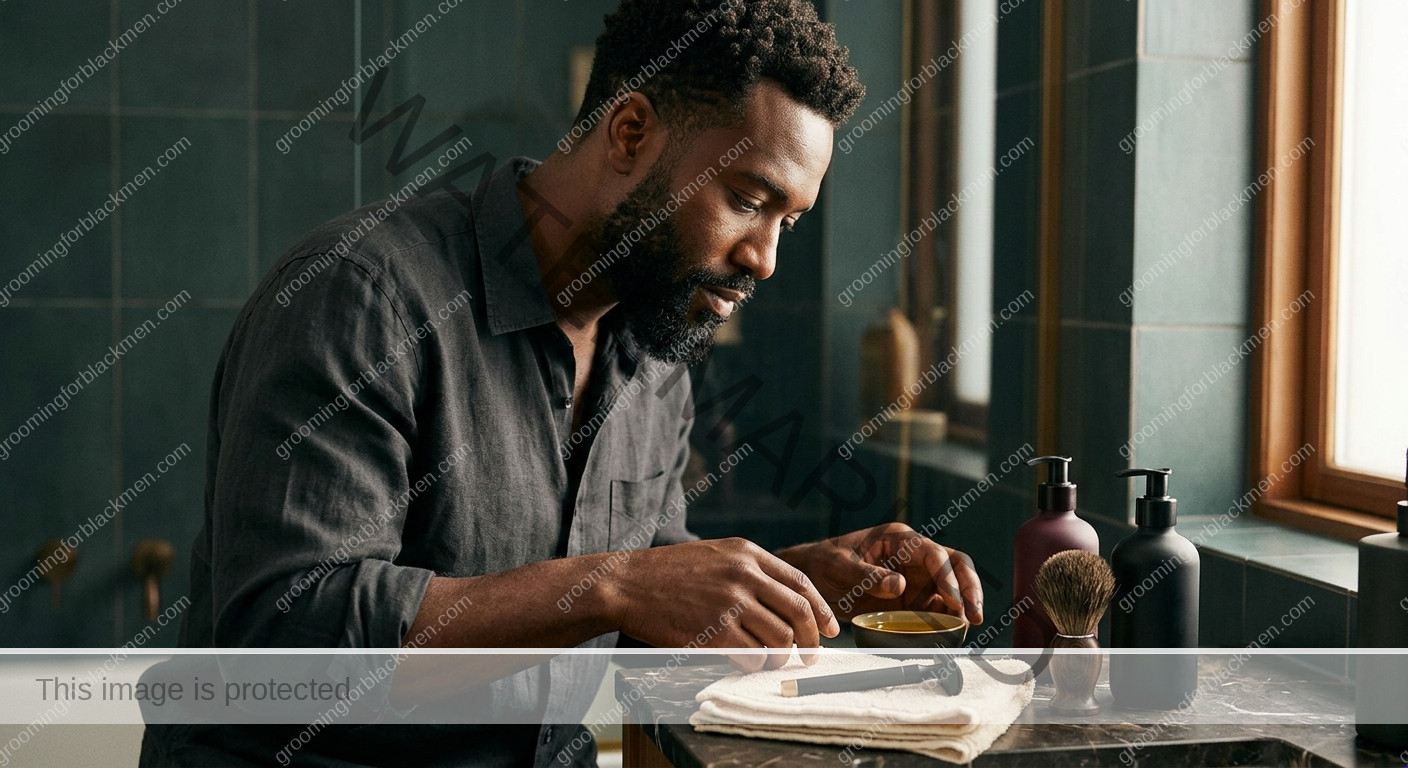

Disclosure: The following product links are examples and may earn a small commission if you purchase through them. Always choose products based on your own skin’s needs and consult a professional for persistent or severe issues.
Shave Creams and Gels
- Choose a fragrance-free shave cream formulated for sensitive skin. Look for thick, cushioning formulas and avoid menthol or alcohol-based products.
- For more options, see our guide to sensitive skin shaving for Black men.
Aftershave Balms
- Use an alcohol-free aftershave balm to soothe and hydrate post-shave. Look for calming ingredients like aloe or oat.
- See post-shave care for Black men for more recommendations.
Moisturizers
- Daily use of a fragrance-free moisturizer helps maintain your skin barrier and prevent dryness or tightness.
- Explore more in our razor bumps and dark marks guide for Black men.
Razors and Trimmers
- Single-blade safety razors with guarded heads are often best for sensitive, bump-prone skin. See best razors and trimmers for Black men for specific models.
- Quality electric shavers can be a strong option for those with severe sensitivity. For a full breakdown, read electric shavers for Black men.
- Guar
ded trimmers offer the lowest risk of bumps. For routines and maintenance, see trimmer routines for Black men.
Troubleshooting: When to Adjust Your Routine or Seek Professional Help

Even with the best routine, sensitive skin can react. Here’s how to troubleshoot common problems—and when it’s time to get help from a dermatologist or qualified clinician.
- Persistent burning or stinging: Double-check your products for hidden fragrances or alcohol. Consider pausing shaving for a few days and switch to a guarded trimmer if needed.
- Redness and bumps: Review your technique—are you shaving with the grain and using light pressure? Try fewer passes and ensure your blades are sharp and clean. For more, see razor bump prevention for Black men.
- Ingrown hairs: Avoid digging or plucking. Use a gentle exfoliant (no harsh scrubs) 1-2 times a week if tolerated. For targeted guidance, see ingrown hairs in Black men and ingrown hair treatment for Black men.
- Dryness and tightness: Increase your use of a fragrance-free moisturizer and check that your aftershave is alcohol-free.
- Dark marks: Consistently moisturize and protect skin from further irritation. For more on managing marks, see razor bumps and dark marks for Black men.
When to see a professional: If you have painful, infected, scarring, spreading, or persistent bumps, or if irritation interferes with daily life, consult a dermatologist or qualified clinician. Some cases may require prescription care—don’t wait for things to get severe.
Frequently Asked Questions
How often should Black men with sensitive skin shave?
There’s no universal answer, but most Black men with sensitive skin benefit from shaving every 2-3 days rather than daily. This gives skin time to recover and reduces cumulative irritation. If you’re prone to severe razor bumps or ingrown hairs, consider using a guarded trimmer and keeping some stubble instead of shaving close every time. Ultimately, listen to your skin: if you notice redness, burning, or new bumps, increase the interval between shaves. For more tips, see our razor bump prevention guide.
Is it better to use a razor or electric shaver for sensitive skin?
It depends on your skin’s tolerance and your grooming goals. Many Black men with sensitive skin find that a quality electric shaver causes less irritation because it doesn’t cut hair as close to the skin, reducing the risk of ingrown hairs. However, a single-blade safety razor with careful technique can also work well. Avoid multi-blade cartridges, which can cut hair below the skin’s surface. For a full breakdown, see our guide to electric shavers for Black men and safety razor vs cartridge for Black men.
What ingredients should I avoid in shaving products for sensitive skin?
Stay away from products with alcohol, strong fragrances, menthol, and harsh exfoliants. These ingredients can trigger burning, redness, and dryness, especially if your skin is already reactive. Instead, look for fragrance-free, alcohol-free, and non-comedogenic formulas. Ingredients like aloe, oat, and ceramides are generally soothing. For more on product selection, see our sensitive skin shaving guide.
How can I prevent dark marks after shaving?
Preventing irritation is the first step: shave with the grain, use a sharp blade, and avoid multiple passes. Moisturize daily with a gentle, fragrance-free product to support your skin barrier. Avoid picking or digging at bumps, as this increases the risk of hyperpigmentation. If dark marks appear, consistent gentle care and sun protection are key. For more, see our guide on razor bumps and dark marks for Black men.
Should I exfoliate if I have sensitive skin?
Gentle exfoliation helps prevent ingrown hairs by removing dead skin, but harsh scrubs or frequent exfoliation can worsen irritation. Use a mild chemical exfoliant (like a low-strength glycolic or lactic acid) once or twice a week if your skin tolerates it. Always follow with a moisturizer. If you notice burning, stinging, or increased redness, stop and reassess. For more on this, see our ingrown hair guide for Black men.
What should I do if I get razor bumps or ingrown hairs?
First, avoid digging, plucking, or squeezing the area—this can worsen inflammation and lead to infection or scarring. Pause shaving if possible and switch to a guarded trimmer. Use a gentle, fragrance-free moisturizer and avoid harsh products. If bumps are painful, infected, or persistent, consult a dermatologist. For more strategies, see our ingrown hair treatment guide for Black men.
Can I get a close shave without irritation?
With the right technique and products, many Black men with sensitive skin can achieve a clean, intentional look without major irritation. Focus on mapping your grain, using a single-blade razor or quality electric shaver, and keeping your routine disciplined—no rushing, no unnecessary passes. Remember, “close” doesn’t always mean “smooth as glass.” Sometimes leaving a little stubble is the best way to protect your skin while still looking sharp. For more, see our razor bump prevention guide.
What to Do Next: Your Path to Better Shaving
Shaving with sensitive skin as a Black man isn’t about perfection—it’s about intention, discipline, and protecting your face for the long run. Start by mapping your grain and building a routine that respects your skin’s unique needs. Choose your tools wisely, avoid harsh products, and stay consistent with aftercare. If you run into trouble, adjust your approach and don’t hesitate to consult a professional for persistent or severe issues.
Ready to take your grooming to the next level? Dive deeper into our full cluster of guides:
- Razor Bump Prevention for Black Men
- Ingrown Hair Treatment for Black Men
- Electric Shavers for Black Men
- Trimmer Routine for Black Men
- Safety Razor vs Cartridge for Black Men
- Map Your Grain for Black Men
- Neck Bumps for Black Men
- Lineup Irritation for Black Men
- Razor Bumps and Dark Marks for Black Men
Your skin is worth the effort. Stay disciplined, stay intentional, and keep your grooming routine premium and practical—on your terms.