
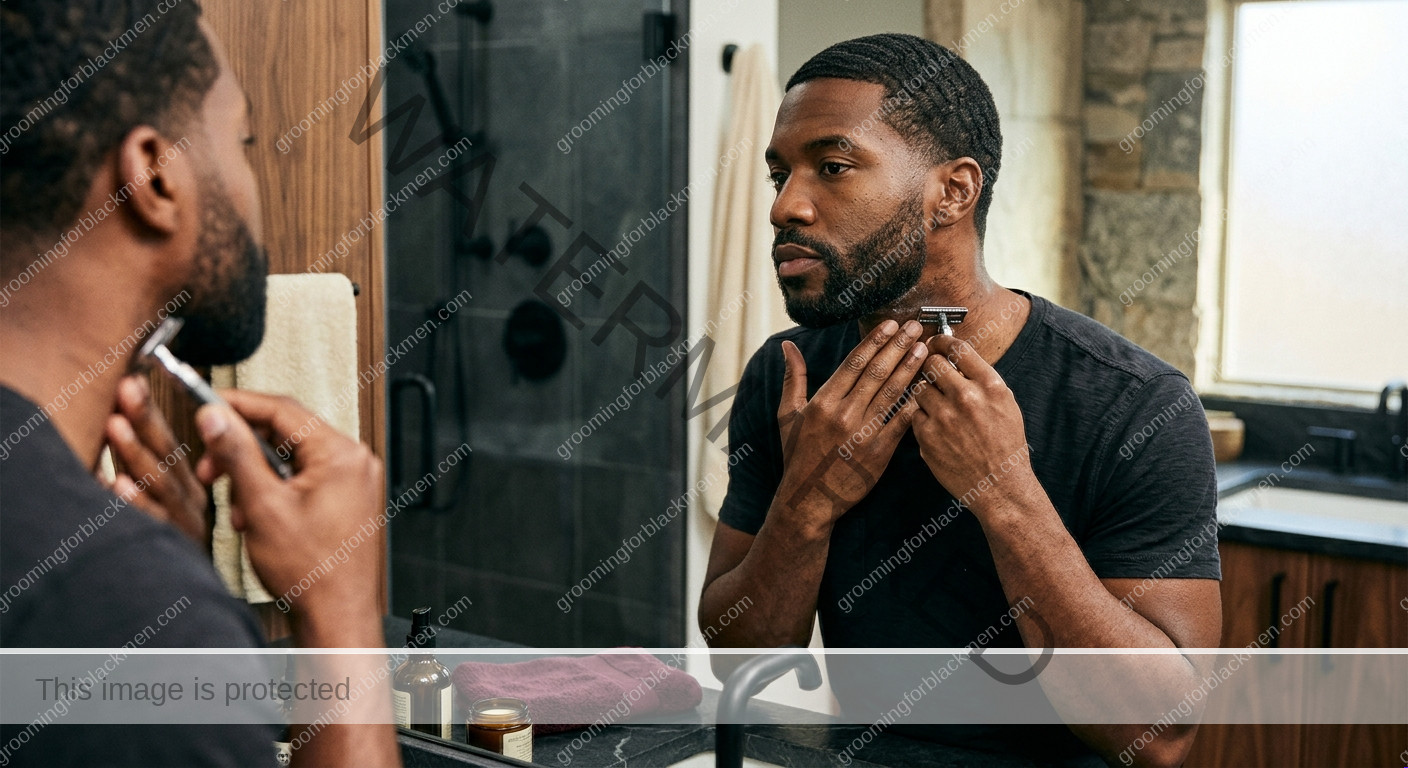
Neck bumps are a reality for many Black men, especially where beard hair changes direction quickly—right under the jawline, along the sides, and at the back of the neck. If you’re reading this, you likely know the frustration: irritation that flares up after a close shave, bumps that seem to cycle back after every lineup, and dark marks that linger long after the tenderness fades. You’re not alone, and you’re not “doing it wrong.” The neck is a different beast, and it demands a disciplined, neck-specific approach.
This guide is for Black men who want a practical, premium plan for reducing neck bumps—whether you rock a sharp lineup, a close fade, or a natural beard. We’ll break down why this happens, what makes it worse, and how to build a routine that respects your skin’s needs. No shame, no magic promises—just grounded, culturally aligned advice for taking control of your neck game.
For a full understanding of razor bumps, shaving systems, and how to prevent ingrown hairs, visit our Razor Bumps, Ingrown Hairs & Shaving Systems pillar. This article focuses on the neck—where beard growth gets complicated and irritation hits hardest.
Field-Test This Routine Before You Judge It
Let’s get real: neck bumps for Black men aren’t just a “cosmetic” issue—they can mess with your confidence, comfort, and even your workday. If you’re tired of waking up to new bumps or dark marks under your jaw, it’s time to put a focused, neck-specific plan into action. Here’s a practical, field-tested routine built for our unique hair growth patterns and daily realities. Don’t just read—try it for two weeks and see what changes. Adjust as you go. Your neck will thank you.
Step 1: Map Your Neck’s Growth Patterns
Before you even think about razors or creams, get to know your neck. Black men’s beard hair often grows in multiple directions, especially under the chin and jawline. This is where under-chin curls, sharp growth changes, and irritation start. Here’s how to map it:
- Let your beard and neck hair grow for 3-4 days without shaving or trimming. Observe the direction each patch grows—use your fingers to feel the grain.
- Note the transition zones—these are the spots where hair suddenly switches direction (often right at the jawline or under the chin). These are your “danger zones” for bumps.
- Take a photo or draw a quick map for reference. This helps when lining up or shaving, especially on rushed mornings.
Step 2: Cleanse and Prep—Don’t Skip This
Neck skin is sensitive and gets hit with sweat, shirt collars, and dirt all day. Start every grooming session with a gentle cleanse:
- Use a fragrance-free, non-drying cleanser—avoid harsh scrubs or alcohol-based products, which can make irritation worse.
- After cleansing, apply a warm, damp towel for 1-2 minutes. This softens coarse hair and opens pores, making hair easier to cut and less likely to curl back in.
- If you’re in a rush, splash with warm water for 30 seconds—don’t skip the prep entirely.
Step 3: Upgrade Your Neck Shaving Technique
Most neck bumps for Black men come from shaving too close, shaving against the grain, or using tools that aren’t clean or sharp. Here’s how to adjust:
- Clippers over razors: For most necks, a good set of clean, sharp clippers with a guard (#1 or #2) is safer than a razor. Clippers cut above the skin, reducing the risk of ingrowns.
- If you must use a razor: Use a single-blade safety razor or barber razor. Shave with the grain only, especially in transition zones. Never stretch the skin taut on the neck—it changes the angle and increases the chance of bumps.
- Don’t chase a super-close shave on the neck. A little shadow is better than a week of irritation.
- Rinse your blade or clippers with hot water before and after use. Disinfect weekly with rubbing alcohol. Dirty tools = more bumps.
Step 4: Master the Barber Line-Up Conversation
Barber visits can be a blessing or a curse for your neck. Here’s how to keep your line-up sharp without sacrificing your skin:
- Speak up about your neck sensitivity. Tell your barber exactly where you get bumps and ask them to use clippers (not a straight razor) below the jawline.
- Request a “natural” or “soft” neck line-up. Ask them not to cut below your mapped growth zones or to avoid shaving too close in transition areas.
- If you see a barber using the same blade on everyone, ask for a fresh blade or bring your own. Tool hygiene matters.
- After your cut, gently cleanse your neck and apply a cool compress at home to soothe irritation before it starts.
Step 5: Counteract Collar Friction and Sweat
Shirt collars, ties, and sweat are silent enemies for neck bumps. Here’s how to fight back:
- Rotate your shirts and wash collars often. Built-up oil and dirt can transfer to your neck and clog pores.
- Use a light, non-comedogenic moisturizer after shaving. This keeps the skin barrier healthy and reduces friction.
- On hot days or after workouts, pat your neck dry and reapply moisturizer or an anti-bump serum. Don’t let sweat sit on your skin for hours.
- Consider collar extenders or wider collars if your neck is often irritated by tight shirts.
Step 6: Fade Out Dark Marks and Hyperpigmentation
Dark marks (post-inflammatory hyperpigmentation) are a common aftermath of neck bumps for Black men. Here’s a neck-specific approach:
- Be gentle—no picking or scratching. Picking makes marks darker and lasts longer.
- Use a moisturizer with niacinamide or licorice extract. These ingredients can help fade dark marks over time without irritating sensitive neck skin.
- Apply a broad-spectrum sunscreen (SPF 30+) to your neck daily, even if you’re not outside much. UV exposure darkens marks and slows healing.
- For stubborn marks, consider seeing a dermatologist for prescription options or targeted treatments. Don’t experiment with harsh bleaching creams at home.
Step 7: Handle Bumps, Tenderness, and Picking the Right Way
It’s tempting to “fix” neck bumps yourself, but aggressive picking or squeezing will only make things worse. Here’s what to do:
- If you get a bump, apply a cool compress and a dab of fragrance-free aloe or a gentle anti-bump serum. Don’t dig or squeeze.
- For tenderness or swelling, skip shaving for a few days and switch to a gentle cleanser and moisturizer only.
- If bumps are painful, infected, or not improving, see a dermatologist or clinician. Early help prevents scarring and long-term dark marks.
- Keep your hands off your neck as much as possible. Even casual scratching can introduce bacteria and worsen irritation.
Step 8: Adjust Your Routine—Don’t Overreact
Every neck is different. The goal isn’t perfection, but steady improvement and fewer flare-ups. Here’s how to tweak your routine without overdoing it:
- Change one thing at a time. If you switch razors, products, or techniques, give it a week before judging the results.
- Track what works. Jot down notes or take photos every few days—especially if you’re trying new tools or barbers.
- Don’t over-wash or over-treat. Too many products or scrubbing can strip your neck’s natural barrier and make things worse.
- Be patient with dark marks. They fade slowly. Focus on preventing new bumps instead of chasing overnight results.
Sample Neck-Specific Routine for Black Men
| Time | Action | Purpose |
|---|---|---|
| Morning |
| Prevents irritation, protects against dark marks |
| After Work/Workout |
| Removes sweat, reduces friction |
| Night |
| Soothes, repairs, fades marks overnight |
Real-World Scenarios: Adjusting Under Pressure
- Rushed Morning: If you’re short on time, prioritize cleansing and a quick clipper trim with the grain. Skip the razor. Moisturize and go. Don’t sacrifice your neck for a “perfect” look.
- Barber Visit: Bring up your neck bump history before the cut. Ask for clippers only below the jaw and a soft line-up. If you see redness after, apply a cool compress at home.
- After a Close Shave: If you went too close and feel irritation, switch to clippers or let your neck hair grow out for a week. Focus on gentle cleansing and soothing products.
- Dealing with Collar Friction: Loosen your collar, switch to softer fabrics, and moisturize before dressing. If possible, go collarless at home to let your neck breathe.
- Persistent Dark Marks: Stick with sunscreen and gentle brightening ingredients. If marks aren’t fading after three months, consult a professional—don’t double up on harsh products.
Tool Hygiene: The Non-Negotiable Step
Dirty tools are a fast track to neck bumps for Black men. Here’s a quick checklist:
- Clean clippers and guards after every use. Use a brush to remove hair, then wipe with alcohol.
- Change razor blades every 5-7 uses. Dull blades tug and cause more irritation.
- Store tools dry and covered. Moisture breeds bacteria. Don’t leave clippers in the bathroom if it’s always humid.
- Never share personal grooming tools. Even with family. Cross-contamination is real.
For more on tool cleaning, check out our clipper vs. razor guide.
When to Get Professional Help
Most neck bumps can be managed with a steady routine and smart adjustments. But if you’re dealing with:
- Painful, pus-filled, or rapidly spreading bumps
- Scarring, keloids, or thick dark marks that don’t fade
- Persistent tenderness or itching that doesn’t improve in 2-3 weeks
Don’t tough it out—see a dermatologist or medical professional. Early attention can prevent long-term damage and help you get back on track. For more practical advice, check our barber shop etiquette guide.
Bottom Line: Own Your Neck Routine
Neck bumps for Black men are a challenge, but not a life sentence. The key is a neck-specific, consistent approach—one that respects your unique hair growth, honors your skin’s needs, and adapts to real life. Field-test this routine, adjust where needed, and don’t get discouraged by setbacks. Your neck deserves the same attention as your face—give it that, and you’ll see the difference.
Why Neck Bumps Happen for Black Men
Neck bumps—technically called pseudofolliculitis barbae—are especially common for Black men due to the unique structure of our facial hair. Here’s what’s at play:
- Curved, coarse hair: Black men’s beard hair is often tightly coiled and grows at a sharper angle, especially on the neck. When cut too short, these hairs can curve back into the skin, causing inflammation and bumps.
- Rapid direction changes: Under the chin and along the jawline, hair often grows in multiple directions within a small area. This makes it easy to shave “against the grain” by accident, increasing the risk of ingrown hairs.
- Sensitive skin zones: The neck is thinner and more prone to irritation than other parts of the beard area. Friction from collars, sweat, and movement adds to the challenge.
- Dark marks (post-inflammatory hyperpigmentation): Inflammation from bumps can leave behind brown or purple spots, especially on melanated skin. These marks can last for weeks or months, even after the bump is gone.
For a deeper dive into the science of razor bumps and why they affect Black men, see our complete razor bumps guide.
What Makes Neck Bumps Worse?

Understanding your triggers is key to breaking the cycle. Here are the most common factors that make neck bumps for Black men worse:
- Shaving too close: Tools that cut below the skin surface (multi-blade cartridges, aggressive razors, or barbershop lineups with a straight razor) can leave hair tips sharp and prone to curling back into the skin.
- Shaving against the grain: Going “against the grain” (opposite to hair growth) on the neck is a leading cause of bumps. The neck’s grain is rarely straightforward; it often swirls or grows sideways.
- Dry shaving or poor lubrication: Shaving without enough moisture or slickness increases friction and irritation, making bumps more likely.
- Collar friction: Tight collars, shirt tags, and athletic gear can rub the neck, worsening irritation and prolonging healing.
- Picking or digging at bumps: Trying to “fix” bumps by picking, squeezing, or digging at ingrown hairs can lead to infection, scarring, and dark marks.
- Dirty or dull tools: Old blades and unclean trimmers can introduce bacteria and increase inflammation.
- Inconsistent routines: Switching up products, skipping pre-shave prep, or changing shaving frequency can throw your skin off balance.
For more on what makes razor bumps worse and how to prevent them, check our razor bump prevention guide.
Neck-Specific Grooming: A Practical Routine and Decision Framework

Reducing neck bumps for Black men isn’t about a single product or hack—it’s about discipline, mapping, and respecting your skin’s natural pattern. Here’s a practical, step-by-step approach:
Step 1: Map Your Neck’s Hair Grain
Every man’s neck is different. Take time to map your grain—the direction your hair grows in each neck zone. Use your fingers or a credit card to feel the direction of least resistance. Draw it out or snap a photo for reference.
- Under the chin, hair may grow forward, sideways, or even in circular patterns.
- On the sides, growth often shifts from downward to outward or diagonal.
- At the back of the neck, hair can swirl or angle upward.
Shaving “with the grain” (in the direction of growth) is the foundation for reducing bumps.
Step 2: Decide on Your Shaving System
Not all tools are equal when it comes to neck bumps. Your options:
- Guarded electric trimmer: Leaves hair slightly above the skin, minimizing ingrowns. Ideal for sensitive necks or active bumps.
- Single-blade safety razor: With proper technique, can work for some men but requires discipline and no pressure.
- Multi-blade cartridge: Cuts very close; often increases bump risk on the neck. Use with caution or avoid for problem areas.
See our safety razor vs cartridge guide and trimmer routine guide for deeper comparisons.
Step 3: Pre-Shave Preparation
- Shave after a warm shower or use a warm, damp towel to soften hair.
- Apply a gentle, non-drying cleanser to remove sweat and oil.
- Use a slick, moisturizing shave gel or cream—avoid foams that dry out the skin.
- Do not stretch the neck skin tight; let it rest naturally.
For a full breakdown, visit our pre-shave routine guide.
Step 4: Shaving Technique
- Shave with the grain only—especially on the neck.
- Use light pressure; let the tool do the work.
- Limit to one or two passes in each area.
- Rinse the blade or trimmer often to keep it clean.
- Do not shave over active bumps or broken skin.
If you’re prone to severe bumps, consider pausing shaving on the neck and using a guarded trimmer until things calm down. See our trimmer routine for razor bumps for practical steps.
Step 5: Post-Shave Care
- Rinse with cool water to calm the skin.
- Pat dry gently—don’t rub.
- Apply an alcohol-free, soothing aftershave balm or gel.
- Use a lightweight, non-comedogenic moisturizer to lock in hydration.
- If you’re dealing with dark marks, see our dark marks and razor bumps guide.
For more details, see our post-shave care guide.
Step 6: Collar and Clothing Management
- Choose shirts with soft collars or tagless necklines when possible.
- Wash collars regularly to prevent buildup of sweat and oils.
- During flare-ups, avoid turtlenecks, tight collars, or anything that rubs the neck.
Step 7: Hands Off—No Picking or Digging
- Resist the urge to pick, squeeze, or dig at bumps or ingrown hairs. This increases risk of infection, scarring, and dark marks.
- If a hair is trapped and visible at the surface, use a clean, pointed tweezer to gently tease it out—never dig below the skin.
- Persistent or painful bumps should be seen by a dermatologist.
For more on safe ingrown hair management, see our ingrown hairs guide.
Step 8: Consistency and Patience
- Stick to your routine for at least 2-4 weeks before making major changes.
- Track what works and what triggers flare-ups (e.g., new products, barber visits, shirt types).
- Adjust based on your skin’s feedback, not just marketing claims.
Comparison Table: Shaving Tools for Neck Bumps
| Tool | Neck Bump Risk | Shave Closeness | Best For | Considerations |
|---|---|---|---|---|
| Guarded Electric Trimmer | Lowest | Stubble/Shadow | Active bumps, sensitive skin, maintenance trims | Not a “clean shave” look; requires regular use |
| Single-Blade Safety Razor | Moderate | Close, but less than cartridge | Disciplined routines, mapped grain, experienced users | Technique is critical; avoid pressure |
| Multi-Blade Cartridge | Highest | Very close | Some lineups, non-problem areas | Often increases bump risk on neck; use with caution |
For more on choosing the right tool, see our razors and trimmers guide.
Product and Tool Examples for Neck Bump Management

Disclosure: The following links are examples only. We may earn a commission if you buy through these links. Always choose products that align with your skin’s needs and test new items carefully.
Electric Trimmer
For most Black men struggling with neck bumps, a guarded electric trimmer is the lowest-risk option. Look for a model with adjustable guards and smooth blades. This approach keeps hair slightly above the skin, reducing the risk of ingrowns and irritation. For tips on using trimmers effectively, see our trimmer routine guide.
Gentle Chemical Exfoliant
If you have persistent ingrown hairs, a salicylic acid ingrown hair treatment can help keep pores clear and support natural exfoliation. Use 1-3 times per week, not daily, and avoid harsh scrubs. Always patch test first. For more on managing ingrowns, see our ingrown hair treatment guide.
Alcohol-Free Aftershave Balm
After shaving or trimming, an alcohol-free aftershave balm can soothe irritation and lock in moisture without stinging or drying out the skin.
Look for formulas with aloe, allantoin, or panthenol. For more post-shave care, see our complete post-shave guide.
Troubleshooting and When to Get Professional Help

Even with the best routine, neck bumps can flare up. Here’s how to troubleshoot:
- If bumps keep returning: Re-examine your grain map. Are you shaving against the grain by accident? Consider switching to a trimmer or extending time between shaves.
- If you notice dark marks: Consistent post-shave care and gentle exfoliation can help. See our guide to dark marks and razor bumps for more strategies.
- If bumps become painful, infected, or spread: Stop shaving
the area and consult a dermatologist. Signs of infection (pus, swelling, severe pain) require medical attention.
- If your barber is making it worse: Ask for clippers only on the neck, no straight razor, and explain your skin’s needs. Bring your own guard if needed. See our lineup irritation guide for more tips.
- If you’re unsure about products: Patch test new items on a small area first. Avoid harsh acids or scrubs on active bumps.
For more on sensitive skin management, visit our sensitive skin shaving guide.
Frequently Asked Questions: Neck Bumps for Black Men
1. Why do I get more bumps on my neck than my face?
The neck is a high-risk zone for Black men because beard hair here often grows in multiple directions, is more tightly coiled, and sits on thinner, more sensitive skin. Shaving across or against the grain is easy to do by accident, especially if you haven’t mapped your neck’s hair pattern. Collars and shirt tags add friction, which can worsen irritation. The combination of curved hair, direction changes, and external rubbing makes the neck especially prone to bumps compared to the cheeks or jawline. For a full explanation, see our neck grain mapping guide.
2. Should I stop shaving my neck if I keep getting bumps?
If neck bumps are persistent or painful, taking a break from shaving can help your skin recover. Many Black men find relief by switching to a guarded electric trimmer, which leaves hair above the skin and reduces the risk of ingrowns. You don’t have to give up a clean look forever, but pausing or changing your approach gives your skin a chance to reset. For step-by-step alternatives, see our trimmer routine guide and razor bump prevention guide.
3. How do I map my neck’s hair growth direction?
Mapping your grain is simple but crucial. Run your fingers or a credit card across your neck in different directions; the path of least resistance is “with the grain.” Do this in small sections—under the chin, sides, and back of the neck—since direction often changes quickly. Draw a diagram or take a photo for reference. Shaving with the grain reduces the risk of bumps. For a detailed walkthrough, visit our grain mapping guide.
4. Can I still get a sharp lineup without causing bumps on my neck?
Yes, but it requires communication and discipline. Ask your barber to use clippers with a guard on the neck instead of a straight razor. Avoid shaving below the skin surface, and request minimal passes. At home, maintain the line with a guarded trimmer. If you’re prone to irritation, skip the razor on your neck entirely. For more on managing barber visits and lineups, see our lineup irritation guide.
5. What can I do about dark marks left by neck bumps?
Dark marks, or post-inflammatory hyperpigmentation, are common after bumps heal. Consistent use of gentle exfoliants (like a mild salicylic acid) and daily moisturizing can help fade marks over time. Sun protection is also important, even for darker skin tones. Avoid picking or digging at bumps, as this increases the risk of lasting marks. For targeted strategies, see our dark marks and razor bumps guide.
6. Are there any products I should avoid on my neck?
Avoid harsh scrubs, high-alcohol aftershaves, and multi-blade razors that shave below the skin surface. Products with strong fragrances or irritants can also worsen sensitivity. If you have active bumps, skip chemical exfoliants until the area calms down. Always patch test new products and stick to alcohol-free, fragrance-free, and non-comedogenic formulas when possible. For a curated list of tools and products, see our razors and trimmers guide and sensitive skin shaving guide.
7. When should I see a dermatologist for neck bumps?
If bumps are painful, spreading, infected (with pus or severe redness), or not improving with careful grooming, it’s time to see a dermatologist. Also seek professional help if you notice scarring, keloids, or persistent dark marks that don’t fade. A dermatologist can offer tailored advice and may recommend prescription treatments if needed. Don’t wait for things to get worse—early intervention can prevent long-term skin changes. For more on when to seek help, see our sensitive skin shaving guide.
What to Do Next: Your Neck Bump Action Plan
- Map your neck’s grain today—don’t guess. Use our neck grain mapping guide for help.
- Choose your shaving system with discipline. If bumps are active, switch to a guarded trimmer and pause razors.
- Dial in your pre- and post-shave routine using our pre-shave and post-shave guides.
- Protect your neck from friction—choose soft collars and wash them regularly.
- Stay hands-off—don’t pick or dig. Let your skin heal.
- Track your progress for 2-4 weeks before making changes. If bumps persist, consult a dermatologist.
For a full system to prevent and manage razor bumps, explore the Razor Bumps, Ingrown Hairs & Shaving Systems pillar and related cluster guides. Your neck deserves the same discipline and respect as your lineup—make it part of your premium grooming standard.